
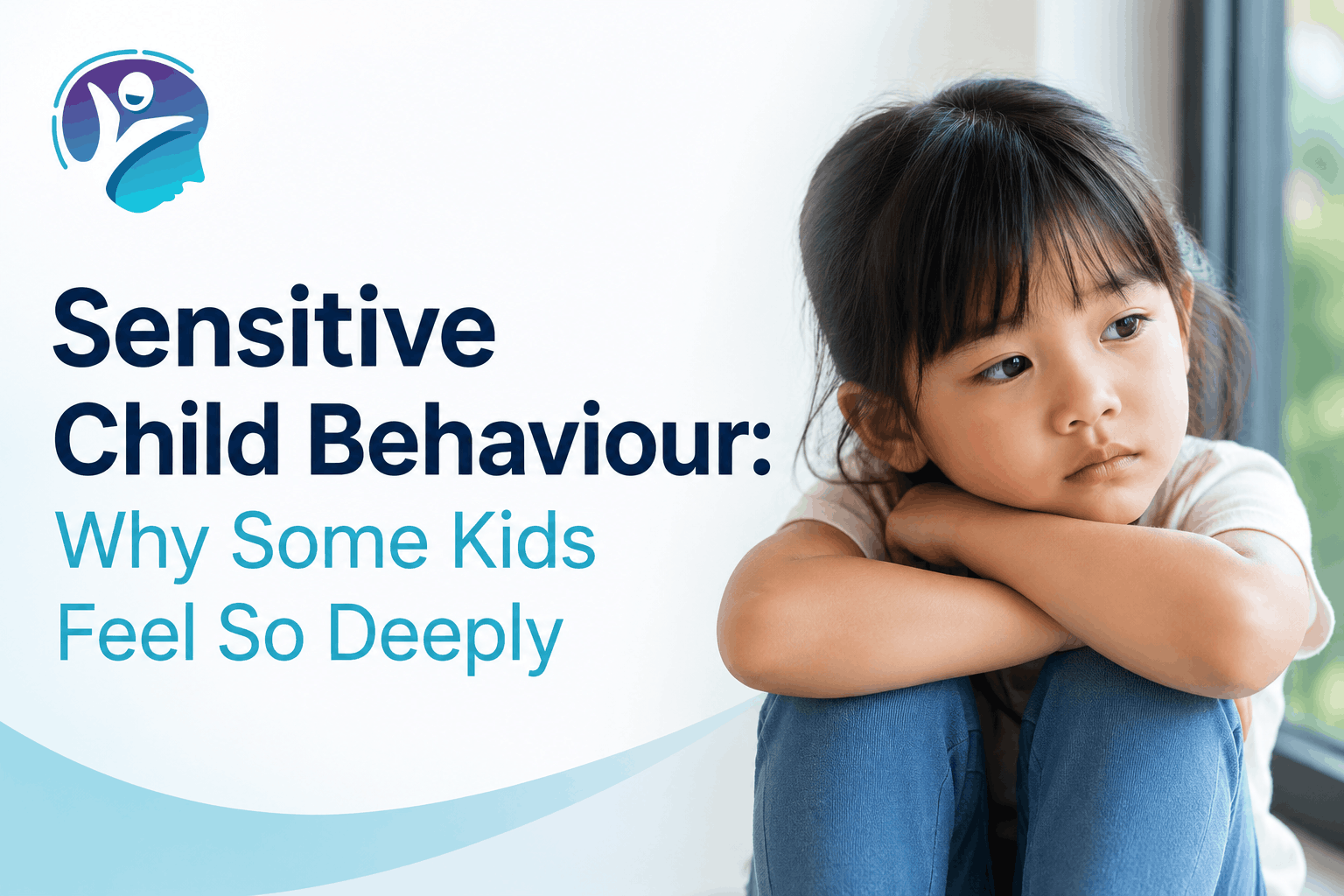
Why Kids Behave Better at School Than at Home: Understanding Child Behaviour at Home
If your child seems calm and cooperative at school but unravels the moment they walk through the front door, you’re not alone. Parents often feel confused or frustrated when child behaviour at home looks completely different, and sometimes more challenging, than at school.
You might wonder:
“Why do they listen to everyone except me?”
“Why do they save their meltdowns just for home?”
“Does this mean I’m doing something wrong?”
The good news? No.
There are very normal reasons kids behave differently at home, and understanding these reasons can transform the way you respond.
Let’s explore what may be happening beneath the surface.
1. Why Child Behaviour at Home Looks So Different
Home Is Where Emotional Safety Lives
Children can only hold in their emotions for so long. At school, they may need to follow rules, manage social situations, wait their turn, complete academic tasks, and cope with transitions. That can require a lot of emotional effort for a developing child.
When they come home, their guard may drop.
This is why child behaviour at home can sometimes include:
- Bigger emotions
- Crying
- Irritability
- Refusal to cooperate
- Whining or defiance
- Emotional outbursts
What looks like defiance may sometimes be a release of emotions that have built up throughout the day. Home can be where children feel safe enough to let those emotions out.
2. Reasons Kids Behave Better at School
School Has Strong Structure and Predictability
Classrooms often run on predictable routines such as morning work, circle time, snack, recess, transitions, and cleanup.
Children can benefit from structured environments because expectations are clear and routines help them know what comes next.
At home, greater flexibility can be healthy, but some children may find less predictable routines harder to manage. When routines are inconsistent, behaviour challenges at home may become more noticeable.
Kids Use Up Their Emotional Energy at School
Children spend hours managing:
- Social interactions
- Sensory stimulation
- Academic tasks
- Rules and expectations
- Transitions
- Activities they may not enjoy
By the time they return home, they may have very little emotional energy left.
This is one reason kids acting out at home may reflect tiredness, overwhelm, or emotional exhaustion rather than disrespect.
Teachers Use Different Behaviour Strategies
Teachers work within structured classroom environments and often use routines, clear expectations, behaviour cues, and classroom-management strategies.
Parents are not expected to run their homes like schools. Home is more relational, emotional, and intimate, and children may naturally behave differently in that environment.
3. Understanding After-School Restraint Collapse
“After-school restraint collapse” is a term sometimes used to describe what happens when children hold themselves together throughout the school day and then become more emotional once they return home.
Why might this happen?
Your presence may signal familiarity and safety. After spending hours following expectations and managing emotions, your child may finally feel able to release some of what they have been holding in.
However, this does not mean every difficult behaviour at home is automatically a sign of secure attachment. Behaviour has many possible causes, so it is important to consider your child’s individual circumstances.
4. What Behaviour Problems at Home May Be Communicating
When school behaviour is relatively positive but home behaviour is intense, your child may be communicating:
- “I’m tired.”
- “I held everything together all day.”
- “I’m overwhelmed.”
- “I need help regulating my emotions.”
- “I need some quiet time.”
This can help parents view child behaviour at home not simply as a “problem,” but as information about what their child may be experiencing.
5. How to Improve Child Behaviour at Home
Create a Gentle After-School Transition
Instead of immediately asking about their day or expecting them to begin homework, consider giving your child some time to decompress.
Try:
- Quiet play
- A healthy snack
- Reduced noise
- Softer lighting
- 10–15 minutes of free time
A short transition period can help some children shift more comfortably from the demands of school to the home environment.
Build Predictable Home Routines
Structure can help children feel more secure and prepared.
Examples include:
- An after-school routine
- A homework routine
- A bedtime routine
- Clear screen-time expectations
- A predictable morning routine
Predictability can reduce uncertainty and help children understand what is expected of them.
Support Emotional Regulation
Children do not automatically know how to calm themselves when they are overwhelmed. They often learn emotional regulation gradually through supportive relationships and co-regulation.
Try:
- Naming emotions: “It looks like your body is tired and overwhelmed.”
- Taking slow breaths together
- Using simple grounding exercises
- Offering comfort and physical closeness when appropriate
Reduce Sensory Overload in the Evenings
After a full school day, some children may benefit from a calmer home environment.
Try:
- Quiet activities
- Lower lighting
- Limiting screens when they increase overstimulation
- Soft music
- Calm play
A less stimulating environment may make it easier for an overwhelmed child to settle.
Teach Expression Instead of Suppression
Encourage your child to talk about how their day felt, not just what they did.
Try asking:
- “What was tricky today?”
- “What made your body feel tired?”
- “Was anything surprising or frustrating?”
- “Was there a moment when you felt worried or upset?”
When children feel heard and understood, they may become more comfortable expressing emotions in healthier ways.
6. When Should Parents Seek Extra Support?
It may be helpful to speak with a child therapist or mental health professional if:
- Aggression is happening frequently
- Meltdowns are unusually intense or difficult to manage
- Behaviour difficulties are affecting family life significantly
- Your child’s school behaviour also begins to decline
- Your child seems persistently anxious, fearful, withdrawn, or shut down
- You feel overwhelmed or unsure how to support them
The difference between school and home behaviour can be common, but persistent or severe behavioural changes deserve attention rather than being dismissed as “normal.”
7. Final Thoughts: Your Child May Be Showing You What They Couldn’t Show at School
When your child falls apart at home, they may not be trying to “test” you or make your day difficult.
They may be showing you that they are tired, overwhelmed, emotionally depleted, or in need of connection and support.
They may behave well at school because they are navigating structure, expectations, and social demands.
At home, they may have fewer resources left to manage those emotions.
Once you understand what child behaviour at home may be communicating, you can respond with a combination of connection, structure, boundaries, and emotional support.
You’re not necessarily failing as a parent.
Your child is not necessarily “difficult.”
Sometimes, challenging behaviour is a signal that your child needs help making sense of the emotions they have been carrying throughout the day.