
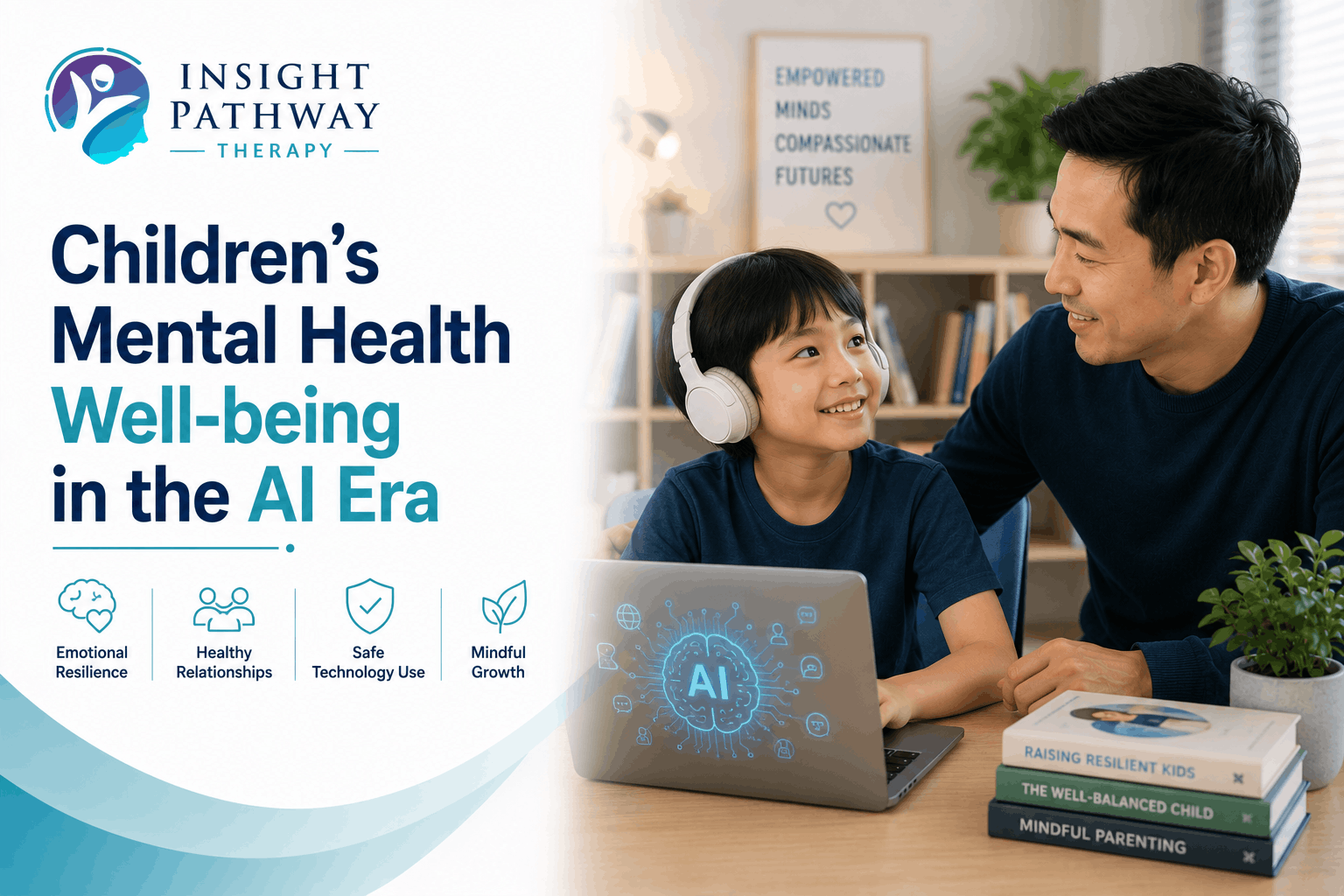
Children’s Mental Health and Well-being in the AI Era
Children today are growing up in a world shaped by artificial intelligence, smart devices, and constant digital interaction. While technology brings learning opportunities and convenience, it also introduces new emotional and psychological challenges.
Understanding children’s mental health in this rapidly changing environment is no longer optional; it is essential for parents, educators, and caregivers.
This guide explores how AI-driven lifestyles affect young minds, the emotional signals parents should watch for, and how the right support systems, including professional child counselling, can help children develop healthy coping skills and emotional balance.
How the AI Era Is Shaping Children’s Mental Health
Artificial intelligence is no longer just a future concept. It influences how children learn, play, communicate, and even relax. Personalised learning apps, voice assistants, and algorithm-driven content are increasingly shaping children's daily routines.
While these tools can enhance learning and convenience, they can also contribute to:
- Reduced face-to-face interaction
- Increased performance pressure
- Shortened attention spans
- Emotional dependency on screens
Over time, these factors may affect emotional regulation, social skills, and self-esteem — key pillars of healthy mental development.
Common Mental Health Challenges Children Face Today
The digital age does not cause mental health problems on its own, but it can amplify existing vulnerabilities. Some common concerns associated with modern lifestyles include:
Anxiety Support for Children in a Digitally Overstimulated Environment
Constant notifications, comparisons on social platforms, and fast-paced digital content can overwhelm young minds.
This may increase the need for anxiety support for children, particularly those who are sensitive to change, social pressure, or academic expectations.
Emotional Development Challenges Children Face in the AI Era
Children may sometimes struggle to identify, express, or manage their emotions when a significant part of their interaction and communication happens through screens rather than real-life experiences.
Developing emotional awareness and learning healthy ways to express feelings can help children navigate these challenges.
Behavioural Changes and the Need for Child Behavioural Guidance
Irritability, withdrawal, sudden anger, or defiance can sometimes indicate that a child is feeling emotionally overwhelmed.
When these changes persist or begin affecting everyday life, structured child behavioural guidance may provide useful support for both children and families.
Early Warning Signs of Children’s Mental Health Struggles
Every child experiences mood swings and difficult days. However, persistent or significant changes in behaviour and emotions deserve attention.
Parents and caregivers can watch for patterns such as:
- Frequent meltdowns or excessive worry
- Trouble sleeping or recurring nightmares
- Loss of interest in activities they once enjoyed
- Difficulty focusing or increased restlessness
- Avoidance of social situations
Recognising these signs early can make it easier for families to understand what a child may be experiencing and consider appropriate support when needed.
The Role of Parents in Supporting Children’s Mental Health
Before professional support is needed, everyday interactions can play an important role in supporting children's emotional well-being.
Parents can help by:
- Creating screen-free family time
- Encouraging open conversations without judgment
- Validating emotions instead of dismissing them
- Modelling healthy technology habits
Children often feel safer and more supported when they know their feelings are heard, understood, and respected.
When Child Mental Health Counselling Becomes Important
Sometimes, support at home may not be enough, and that is okay.
Professional child counselling can provide a structured and supportive environment where children can express emotions they may not yet have the words to explain.
Through age-appropriate techniques, counselling can help children:
- Understand and manage their emotions
- Build coping strategies for anxiety and stress
- Improve communication and social confidence
- Develop emotional resilience in a technology-driven world
Child mental health counselling is not about labelling a child. It is about providing appropriate support and helping them develop skills to navigate emotional challenges.
How Counselling Supports Children in the AI Era
Modern counselling approaches can take into account the challenges children experience in today's digital environment. Sessions may focus on several areas.
Emotional Awareness and Children’s Mental Health in the AI Era
Children can learn to recognise and understand feelings that may be connected to digital overload, peer comparison, academic pressure, or changes in their social environment.
Healthy Coping Skills for Anxiety Support for Children
Instead of relying primarily on screens as a way of escaping difficult emotions, children can learn practical coping tools such as grounding exercises, emotional expression, and problem-solving skills.
Balancing Screen Time, Emotions, and Real-World Interaction
Counsellors can also help families explore healthier digital routines and encourage a balance between screen-based activities and real-world interaction without relying on fear or strict punishment.
When introduced at an appropriate stage, counselling can serve as a proactive support system rather than only a response to a crisis.
Building Emotional Resilience Through Child Counselling
Resilience is not about avoiding challenges. It is about learning how to navigate them.
In the AI era, emotionally resilient children can be better equipped to:
- Adapt to changes
- Handle academic and social pressure
- Maintain self-worth beyond online validation
- Develop meaningful real-world relationships
Combining parental support with appropriate professional guidance can help create a strong foundation for children's emotional well-being.
Why Early Support Matters for Children’s Mental Health
Addressing emotional struggles early can help families understand concerns before they become more difficult to manage.
Timely child counselling can provide children with an opportunity to understand themselves better, develop coping skills, and receive appropriate emotional support.
Seeking help is not a sign of failure. It can be a sign of awareness, care, and a willingness to support a child's well-being.
Conclusion: Supporting Children Beyond the Screen
The AI era is here to stay, and children will continue to grow alongside technology.
Protecting children's mental health means finding a healthy balance between innovation and emotional connection, digital tools and human understanding.
By staying informed, emotionally present, and open to professional support when needed, parents can help children thrive — not only academically, but emotionally as well.
If your child is showing signs of emotional distress or struggling to cope with modern pressures, exploring supportive child counselling may be a meaningful step towards healthier development and long-term well-being.