
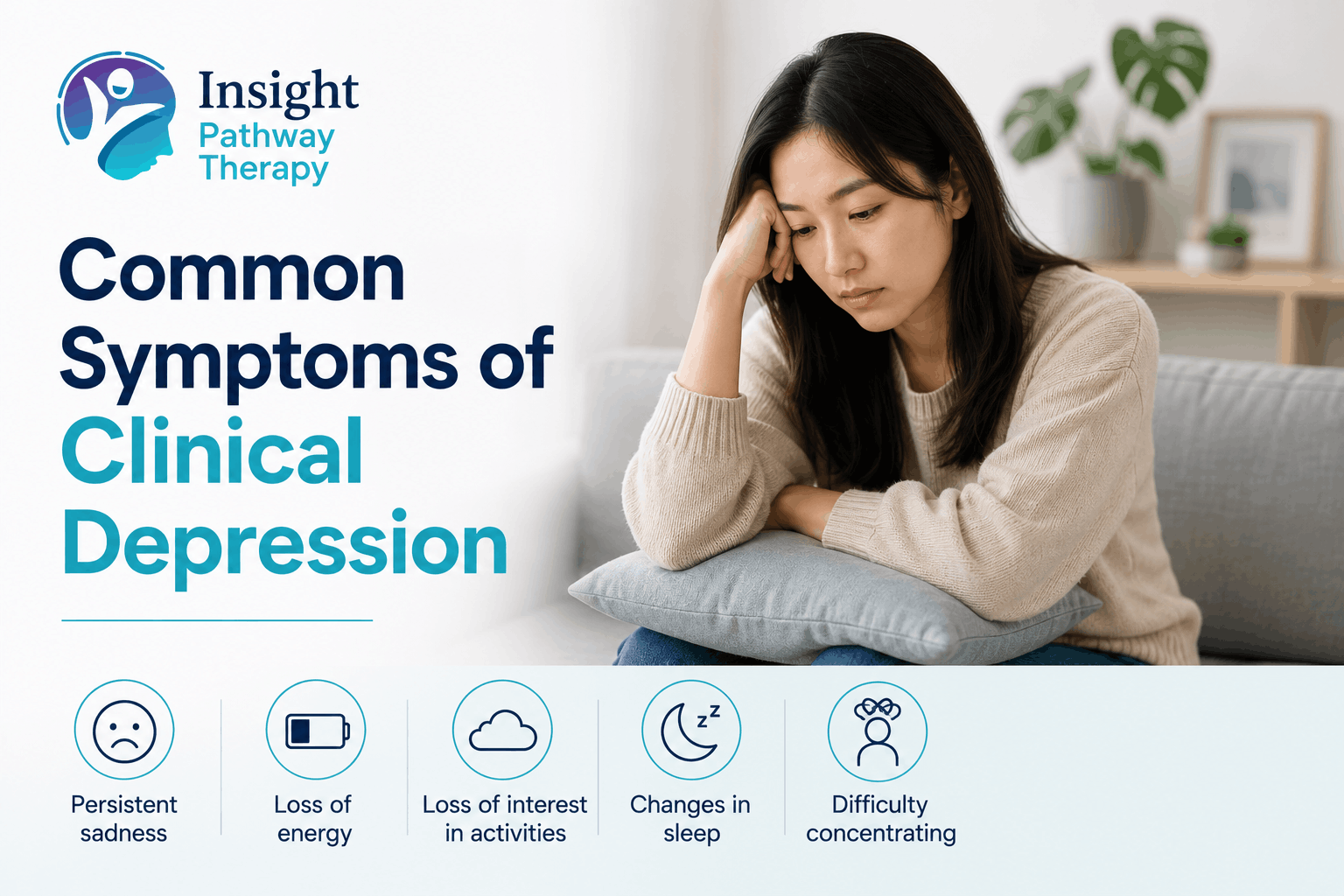
9 Common Symptoms of Clinical Depression and When to Seek Help
Everyone feels down from time to time. Sadness is a normal part of life, particularly when we experience disappointment, loss, stress, or other difficult circumstances.
But when changes in mood persist and begin affecting your ability to work, enjoy activities, sleep, maintain relationships, or manage everyday responsibilities, it may be time to seek professional support.
Clinical depression, also known as major depressive disorder, involves a pattern of emotional, physical, and behavioural symptoms that can significantly affect daily functioning.
This article explores nine common symptoms associated with clinical depression, why recognising changes early can be important, and the types of support that may be available.
Understanding Clinical Depression
Clinical depression goes beyond an occasional period of sadness or having a difficult day.
Depression can affect how you feel, think, behave, and function in everyday life. Even simple tasks may begin to feel exhausting or overwhelming.
Symptoms can vary from person to person. Some people experience persistent sadness, while others primarily notice loss of interest, fatigue, sleep changes, difficulty concentrating, or physical discomfort.
Having some of these symptoms does not automatically mean that you have clinical depression. A doctor or mental health professional can assess your symptoms, their duration, their impact on your life, and other possible contributing factors.
1. Persistent Low Mood
One of the commonly recognised symptoms of depression is a persistent low, sad, empty, or hopeless mood.
You may feel emotionally heavy even when there is no obvious reason for how you are feeling.
For some people, this can involve frequent tearfulness. For others, it may feel more like emotional numbness or a sense that things will not improve.
Persistent changes in mood become particularly important when they interfere with everyday functioning or continue over time.
2. Loss of Interest in Enjoyable Activities
Another common symptom is losing interest or pleasure in activities that you previously enjoyed.
Music, hobbies, food, exercise, socialising, or spending time with people you care about may no longer feel rewarding.
You may start cancelling plans or withdrawing from activities because you simply do not have the emotional energy or motivation.
This withdrawal can sometimes contribute to social isolation, which may make feelings of loneliness and disconnection more difficult to manage.
3. Fatigue or Lack of Energy
Depression can affect energy levels as well as mood.
You may feel exhausted even after what seems like adequate rest. Everyday tasks such as showering, cooking, getting dressed, or going to work may require much more effort than usual.
This lack of energy can make it difficult to maintain routines and may contribute to frustration or feelings of inadequacy.
4. Changes in Sleep Patterns
Depression can affect sleep in different ways.
Some people experience insomnia and have difficulty falling asleep or staying asleep. Others may sleep much more than usual.
You might also notice changes in your usual sleeping schedule, such as waking much earlier than expected and being unable to return to sleep.
Sleep difficulties can also affect mood, energy, and concentration, making other symptoms harder to manage.
5. Appetite or Weight Changes
Changes in appetite can occur with depression.
Some people lose interest in food and eat considerably less than usual. Others may experience increased appetite or use food as a way of coping with difficult emotions.
Significant changes in eating patterns or weight that cannot be easily explained may be worth discussing with a healthcare professional.
6. Feelings of Worthlessness or Excessive Guilt
Depression can influence the way you see yourself.
You may become increasingly self-critical or experience thoughts such as:
“I’m a failure.”
“Everything is my fault.”
“I’m a burden to everyone.”
These thoughts can feel convincing when you are struggling, even when they do not reflect the situation objectively.
Persistent feelings of worthlessness or excessive guilt are important symptoms to discuss with a mental health professional.
7. Trouble Concentrating or Making Decisions
Depression can make it harder to focus, remember information, organise your thoughts, or make decisions.
Even relatively simple choices may feel overwhelming.
At work or school, you may notice more mistakes, difficulty completing tasks, or a reduced ability to stay focused.
These changes can create additional stress and may sometimes be misunderstood by colleagues, teachers, or family members.
8. Physical Discomfort
Depression can sometimes occur alongside physical symptoms.
Some people experience headaches, digestive discomfort, aches, or other unexplained physical complaints.
This does not mean that physical symptoms are necessarily caused by depression. Many medical conditions can produce similar symptoms, which is why persistent or unexplained physical changes should be discussed with an appropriate healthcare professional.
Considering both physical and emotional health can help ensure that underlying concerns are not overlooked.
9. Thoughts of Death or Suicide
Some people experiencing severe depression may have thoughts about death, dying, suicide, or feeling that others would be better off without them.
These thoughts should always be taken seriously.
If you are experiencing thoughts of suicide or feel that you may act on them, seek immediate support from emergency services, a crisis service, a doctor, or a trusted person who can stay with you. If you believe you are in immediate danger, do not stay alone.
If someone you know is expressing suicidal thoughts, encourage them to seek professional help and take the situation seriously.
Why It’s Important to Seek Support
Depression can affect many areas of life, including physical health, relationships, work, studies, and everyday functioning.
Seeking support does not mean that you have failed or that you should have been able to manage everything on your own.
A mental health professional can help you understand what you are experiencing and identify an appropriate path forward.
The type of support you need may depend on the severity of your symptoms, your circumstances, your preferences, and whether other mental or physical health concerns are involved.
Types of Depression Treatment and Support
Therapy
Talking with a qualified mental health professional can provide a safe space to explore thoughts, emotions, behaviours, and life circumstances.
Approaches such as Cognitive Behavioural Therapy (CBT) may help people identify unhelpful thought patterns and develop more adaptive ways of coping.
The most appropriate therapeutic approach depends on the individual and their needs.
Medication
For some people, medication such as antidepressants may be recommended by a qualified medical professional.
Medication is not appropriate for everyone, and decisions about antidepressants should be made with a doctor or other appropriately qualified prescriber.
Lifestyle and Daily Support
Healthy routines can support overall mental well-being alongside appropriate professional care.
Depending on your circumstances, this may include:
- Maintaining a regular sleep routine
- Eating regularly and nourishing your body
- Engaging in appropriate physical activity
- Staying connected with supportive people
- Spending time outside
- Reducing alcohol or other substances that may worsen mood
- Creating manageable daily routines
These steps are not a substitute for professional treatment when depression is significant, but they can form part of a broader approach to well-being.
Online Counselling
For some people, online counselling can make accessing support more convenient.
It may be useful for people who prefer remote sessions, have demanding schedules, or feel more comfortable beginning therapy from their own environment.
Whether online or in person, the most important consideration is finding appropriate professional support that fits your needs.
When to Talk to a Professional
Consider speaking with a doctor or mental health professional if you notice persistent changes in mood, interest, sleep, appetite, energy, concentration, or self-worth that are affecting your everyday life.
A commonly used clinical guideline is that depressive symptoms lasting at least two weeks warrant professional attention, particularly when they are causing significant distress or interfering with daily functioning.
However, you do not need to wait two weeks to ask for help.
If your symptoms are severe, rapidly worsening, or affecting your ability to stay safe or function normally, seek support sooner.
Final Thoughts: Recognising the Signs of Depression
Recognising the symptoms of clinical depression can be an important first step toward seeking appropriate support.
Persistent low mood, loss of interest, fatigue, sleep or appetite changes, feelings of worthlessness, difficulty concentrating, physical symptoms, and thoughts of death or suicide can all occur in depression.
At the same time, these symptoms can have other causes, which is why professional assessment matters.
If you recognise several of these changes in yourself or someone you care about, consider reaching out for support.
Depression is a treatable mental health condition, and seeking help can be an important step toward understanding what you are experiencing and finding appropriate care.