
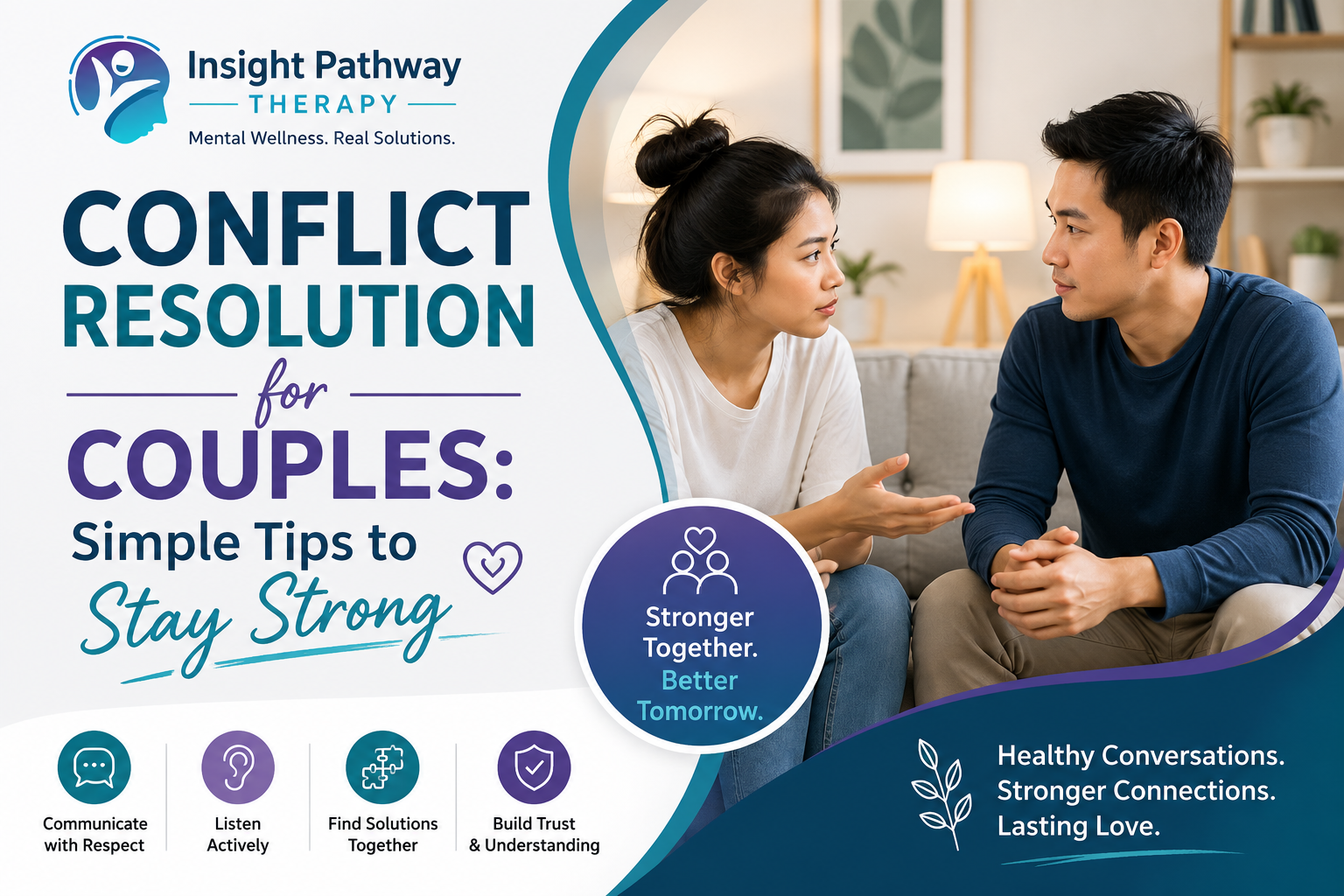
No matter how strong a relationship is, disagreements are a natural part of being a couple. Partners may argue about everyday responsibilities such as household chores, as well as more complex issues involving emotional disconnection, finances, family expectations, or trust.
Sometimes, conflict is less about the immediate disagreement and more about an underlying need to feel heard, appreciated, respected, or emotionally secure. Add the pressures of daily life, long working hours, financial concerns, or family expectations, and even connected couples can find themselves struggling to communicate.
Conflict does not automatically mean that a relationship is broken. When handled with care, disagreements can create opportunities for greater understanding, clearer communication, and stronger connection.
The goal of conflict resolution for couples is not to avoid every disagreement. It is to learn how to navigate differences in a way that protects the relationship while allowing both partners to express their needs.
Why Do Couples Fight?
Before looking at ways to resolve conflict, it helps to understand some common reasons couples disagree.
Frequent sources of relationship conflict include:
- Communication difficulties
- Unmet emotional or physical needs
- Financial or career-related stress
- Different expectations
- Feeling unappreciated or overlooked
- Infidelity or trust concerns
- Emotional distance or disconnection
- Family or in-law pressures
- Differences in priorities or values
Many disagreements do not begin with bad intentions. They may develop from misunderstandings, unmet needs, stress, or resentment that has accumulated over time.
When smaller concerns remain unspoken, they can sometimes become larger sources of conflict. Learning healthier ways to address disagreements can help couples prevent recurring arguments from becoming entrenched patterns.
1. Speak Openly, Not Through Hints
One common communication problem is expecting your partner to know what is wrong without directly telling them.
A person may become distant, irritated, or withdrawn while hoping their partner will “understand the hint.” Unfortunately, indirect communication can create confusion and make both partners feel misunderstood.
Instead, try expressing your feelings and needs as clearly and calmly as possible.
For example, instead of saying:
“You don’t care about me anymore.”
you could say:
“Lately, I’ve been feeling disconnected from you, and I’d really like us to spend more quality time together.”
The second statement communicates the underlying feeling and need without immediately blaming your partner.
Open communication gives both people a better opportunity to understand what is actually happening beneath the disagreement.
2. Focus on Feelings, Not Fault
When conflict becomes focused on who is to blame, conversations can quickly become defensive.
The goal of a disagreement should not be to prove who is right. Instead, try to understand what each person is experiencing and identify what needs to change.
“I” statements can help you communicate your experience without turning the conversation into an accusation.
Instead of:
“You never listen to me.”
try:
“I feel unheard when I’m talking and don’t feel like I’m getting a response.”
This does not mean avoiding accountability. If you have genuinely made a mistake, taking responsibility is important. The aim is simply to communicate the problem without unnecessarily attacking your partner.
3. Keep the Current Conflict Focused
It can be tempting to bring up every past disagreement when you are already upset.
However, turning every argument into a list of previous mistakes can make it difficult to address the issue in front of you.
Whenever possible, focus on the current problem.
If older issues continue to affect the relationship, set aside a separate time to discuss them rather than bringing them into every new disagreement.
For couples who repeatedly become stuck in unresolved patterns, professional support such as [couples counselling](https://insightpathwaytherapy.com/signs-you-need-couple-therapy/) can provide a structured environment to explore difficult issues and improve communication.
4. Make Listening Your Superpower
Communication is not only about expressing yourself. It also involves listening carefully to your partner.
When your partner is sharing something important:
- Try not to interrupt.
- Avoid immediately preparing a rebuttal.
- Ask questions when you do not understand.
- Reflect back what you think you heard.
- Give yourself time to understand before responding.
Sometimes, people do not need an immediate solution. They first need to feel heard and understood.
You might ask:
“What did you mean when you said you felt alone?”
or:
“Can you help me understand what has been difficult for you?”
Active listening can reduce misunderstandings and create more space for empathy during difficult conversations.
5. Choose Curiosity Over Ego
Conflict can become more difficult when one or both partners become focused on being right.
A relationship is not a debate that one person needs to win.
Instead of immediately asking, “How can I prove my point?” try asking:
“What might my partner be experiencing right now?”
“What am I not understanding about their perspective?”
“What is the underlying issue for both of us?”
Curiosity can create space for empathy and compromise. It does not mean agreeing with everything your partner says. It means being willing to understand their perspective before deciding how to respond.
6. Learn to Pause When Needed
Not every disagreement needs to be resolved immediately.
When emotions become intense, continuing the conversation may make it harder for either person to communicate thoughtfully.
A short, intentional pause can give both partners an opportunity to regulate their emotions before returning to the conversation.
You might say:
“I want to talk about this, but I’m getting overwhelmed. Can we take a short break and come back to it when we’re both calmer?”
A pause is most helpful when it is used as a way to return to the conversation—not as a way to avoid the issue indefinitely.
7. Know When to Ask for Help
Some relationship problems are difficult to resolve without support.
If arguments are frequent, repetitive, unresolved, or emotionally exhausting, speaking with a relationship counsellor may be worth considering.
Couples counselling can provide a structured space where both partners can explore communication difficulties, emotional needs, recurring conflict patterns, trust concerns, and other relationship challenges.
Professional support may be particularly useful when couples feel as though they have the same argument repeatedly without making meaningful progress.
Why Couples Counselling Can Help
Couples counselling is not only for relationships that are close to ending.
Some couples seek counselling because they want to improve communication, strengthen emotional connection, work through recurring conflict, or address concerns before they become more difficult to manage.
A trained relationship counsellor can help couples explore the patterns that develop between them and understand how individual experiences, expectations, attachment patterns, and family dynamics may influence the relationship.
Counselling does not guarantee a particular outcome for every couple. Instead, it can provide a supportive and structured environment for understanding the relationship, developing healthier communication patterns, and making informed decisions about the way forward.
If one or both partners are also experiencing significant emotional difficulties, addressing those concerns alongside relationship issues may be an important part of the overall process.
Final Thoughts: Conflict Can Be an Opportunity for Understanding
Every couple experiences moments of disagreement. What matters is how those disagreements are handled.
Healthy conflict resolution does not mean eliminating differences. It means learning how to communicate through those differences without losing respect, emotional safety, or connection.
Speaking openly, listening carefully, staying focused on the issue, taking appropriate pauses, and approaching disagreements with curiosity can all contribute to healthier communication.
And when conflict feels too difficult to navigate alone, seeking support is not a sign that your relationship has failed. Couples counselling can provide a structured space to understand recurring patterns and explore healthier ways of relating.
A strong relationship is not one without conflict. It is one where both partners can work through differences with honesty, respect, and a willingness to understand each other.