
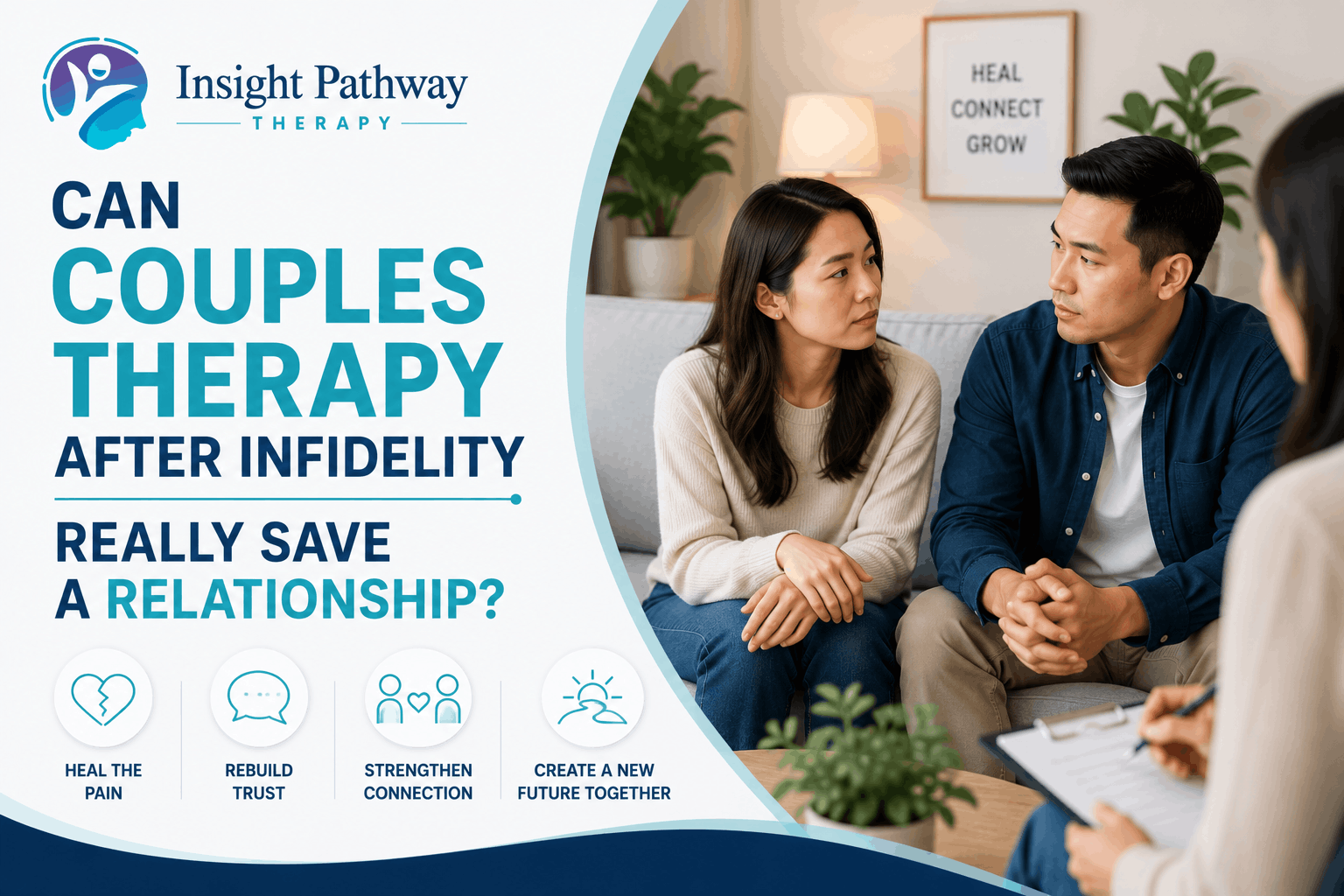
Can Couples Therapy After Infidelity Save a Relationship?
Infidelity is one of the most painful breaches of trust in a relationship. For many couples, discovering cheating can make the future of the relationship feel uncertain.
Yet, many partners ask themselves: Can couples therapy after infidelity really save our relationship?
The answer is complex. Healing after betrayal requires commitment, honesty, professional guidance, and time. While some couples work toward reconciliation and a stronger relationship, others gain the clarity they need to move forward separately.
In either case, couples therapy can provide structure and support while two people navigate one of the most difficult experiences a relationship can face.
1. Why Infidelity Hurts So Deeply
Cheating is not simply about the act itself. It can affect trust, intimacy, emotional security, and the way partners understand their relationship.
The betrayed partner may experience shock, anxiety, grief, intrusive thoughts, or difficulty feeling safe again. Meanwhile, the partner who cheated may experience guilt, shame, fear, or defensiveness.
When emotions are this intense, honest conversations can become extremely difficult without support. Infidelity counselling can provide a structured environment where couples can begin to understand and process what has happened.
2. What Happens in Couples Therapy After Infidelity?
Many couples are unsure what to expect when they begin therapy after betrayal.
A typical process may include:
Initial Stabilisation
The therapist helps partners process immediate emotions and establish boundaries and ground rules for respectful communication.
Exploring What Happened
Therapy can help couples explore the circumstances surrounding the infidelity and understand relationship patterns or individual factors that may need attention.
This does not mean excusing the affair or shifting responsibility away from the person who was unfaithful. Understanding contributing factors is different from justifying the decision to cheat.
Rebuilding Trust
Partners can work toward greater transparency, accountability, consistency, and emotional safety.
Redefining the Relationship
Therapy can help couples decide whether they want to rebuild the relationship and, if so, what they want their relationship to look like moving forward.
3. Can Therapy Save a Relationship After Cheating?
The duestion “Can therapy actually save us?” does not have a one-size-fits-all answer.
Couples can sometimes rebuild their relationship after infidelity, but the outcome depends on many factors.
These may include:
- Both partners being willing to engage in the healing process
- Honesty and transparency
- Accountability from the partner who was unfaithful
- A willingness to address underlying relationship and individual concerns
- Patience with the recovery process
- A commitment to changing unhealthy patterns
Couples therapy after infidelity can offer hope and structure, but therapy cannot guarantee reconciliation or a particular outcome.
4. Rebuilding Trust After Infidelity: What It Takes
Trust is rarely restored overnight. Rebuilding it requires repeated experiences of honesty, reliability, and emotional safety.
Transparency
The unfaithful partner may need to demonstrate greater openness and accountability. Specific boundaries or transparency practices should be discussed and agreed upon rather than imposed as a universal rule.
Consistency
Trust grows when words and actions continue to align over time.
Communication Skills
Therapy can help couples learn how to express pain, needs, questions, and concerns without escalating into blame or defensiveness.
Forgiveness and Boundaries
Forgiveness is deeply personal and does not need to happen immediately. Each partner can decide what boundaries they need while determining whether and how the relationship can move forward.
5. Common Myths About Infidelity Counselling
“If Cheating Happened, the Relationship Is Over”
Infidelity does not automatically determine the outcome of every relationship. Some couples choose to work toward reconciliation, while others decide that separation is healthier for them.
“Therapy Just Lets the Cheater Off the Hook”
Effective therapy does not mean avoiding accountability. The person who was unfaithful remains responsible for their choice, while therapy may also explore broader relationship dynamics and individual patterns where appropriate.
“The Betrayed Partner Must Forgive to Move On”
Forgiveness is not a requirement for healing. A person can work toward emotional recovery, establish boundaries, and make decisions about the relationship without immediately forgiving their partner.
6. When Therapy May Not Save the Relationship
While marriage counselling after infidelity can provide valuable support, it does not guarantee reconciliation.
Therapy may be particularly difficult when there is:
- Repeated infidelity without meaningful accountability
- Refusal to participate honestly in the process
- Ongoing deception
- Lack of willingness to address harmful patterns
- Abuse, coercion, or manipulation
In situations involving abuse or coercive control, the priority should be safety rather than trying to preserve the relationship through couples therapy.
Even when reconciliation is not possible, individual or appropriate therapeutic support can help partners develop clarity, process the experience, and move forward.
7. How to Decide If Couples Therapy Is Right for You
If you’re unsure whether to try therapy after betrayal, consider questions such as:
- Do we both want to explore healing, even if we are uncertain about the outcome?
- Is the partner who was unfaithful willing to take responsibility and be honest?
- Are we willing to have difficult conversations in a structured and supportive environment?
- Can we work toward creating emotional safety while deciding what comes next?
If both partners are willing to explore these questions, couples counselling may provide the structured support needed to understand the relationship and make informed decisions about its future.
8. Healing After Betrayal: Growth Beyond Survival
For couples who choose to work through the experience, therapy can create opportunities for deeper understanding and meaningful change.
This may include:
- A clearer understanding of one another’s needs
- Stronger communication skills
- Healthier approaches to conflict
- A clearer vision for the relationship
- Greater self-awareness
- A better understanding of personal and relationship boundaries
Healing after betrayal is not about pretending the infidelity never happened. It is about understanding its impact, addressing what needs to change, and deciding what kind of future is possible.
That future may involve rebuilding the relationship together or moving forward separately with greater clarity and self-understanding.
9. Final Thoughts: Can Couples Therapy Save a Relationship After Infidelity?
So, can couples therapy after infidelity save a relationship?
Sometimes, couples are able to rebuild trust and create a healthier relationship after betrayal. But therapy cannot promise that every relationship will survive infidelity.
What therapy can offer is a structured space to process what happened, establish accountability, communicate more effectively, explore whether trust can be rebuilt, and make thoughtful decisions about the future.
Infidelity does not have to determine the rest of your story.
If you’re navigating betrayal, seeking professional infidelity counselling or couples counselling may be a valuable first step toward understanding what comes next, whether you choose to rebuild together or move forward separately.