
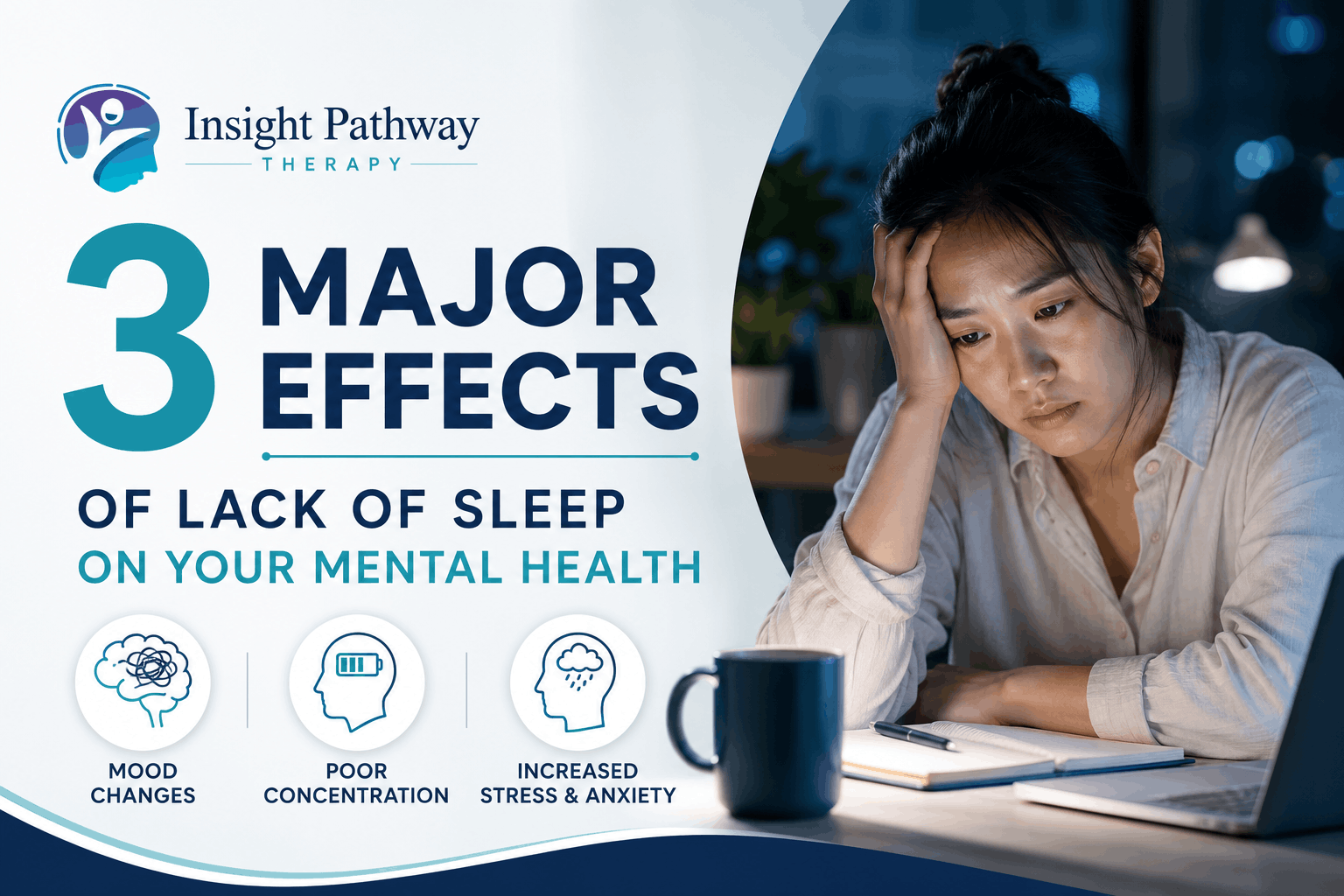
3 Major Effects of Lack of Sleep on Your Mental Health
We’ve all had nights when sleep doesn’t come easily. You toss and turn, check the time, and when morning arrives, you may feel groggy, irritable, and disconnected.
But the effects of lack of sleep can extend beyond simply feeling tired. Poor sleep can affect mood, concentration, emotional regulation, and how we cope with everyday stress.
Sleep is an important part of physical and mental well-being. While we sleep, the brain and body carry out processes that support memory, emotional processing, and recovery.
When sleep problems become frequent or persistent, they can begin to affect many areas of daily life.
Let’s explore three important effects of lack of sleep on mental health, the signs of sleep deprivation to watch for, and practical steps that may help you develop healthier sleep habits.
The Link Between Sleep and Mental Health
Sleep and mental health are closely connected.
Poor sleep can make it harder to regulate emotions and cope with stress, while anxiety, depression, and other mental health difficulties can also make it harder to fall asleep or stay asleep.
This can create a difficult cycle.
For example, you may lie awake worrying about the next day. After getting very little sleep, you may feel more irritable or overwhelmed the following day. These feelings can then make it harder to relax when bedtime arrives.
Recognising this connection is important because improving sleep may support your overall well-being, while addressing underlying emotional difficulties may also help improve sleep.
1. Sleep and Depression: How Poor Sleep Can Affect Your Mood
One of the most noticeable effects of lack of sleep can be a change in mood.
After a poor night's sleep, you may feel more irritable, emotionally sensitive, unmotivated, or overwhelmed. When poor sleep continues over time, it can also be associated with a greater risk of experiencing depressive symptoms.
The relationship between sleep and depression works in both directions. People experiencing depression may have difficulty sleeping, while persistent sleep difficulties may contribute to worsening mood and emotional well-being.
When you are sleep-deprived, everyday problems can also feel harder to manage. Small frustrations may feel much bigger, and you may find yourself withdrawing from activities or people you normally enjoy.
Some people may experience feelings of hopelessness or emotional numbness when they are struggling with significant sleep problems and other mental health difficulties.
If you are experiencing persistent low mood, hopelessness, or thoughts of harming yourself, seek professional support rather than trying to manage the situation through sleep changes alone. If you are in immediate danger or feel unable to keep yourself safe, seek urgent local emergency or crisis support.
2. Poor Sleep Can Increase Stress and Emotional Sensitivity
Another important effect of lack of sleep is that you may become more emotionally reactive.
When you are tired, everyday challenges can feel more difficult to handle. You may become frustrated more quickly, find yourself snapping at loved ones, or feel more anxious about situations that you would normally manage comfortably.
Sleep supports the brain processes involved in emotional regulation. When you do not get enough rest, it can become harder to pause, think clearly, and respond calmly to stressful situations.
Stress and sleep can also reinforce each other.
Stress may make it difficult to fall asleep, while poor sleep may leave you feeling less equipped to cope with stress the next day.
This can create a cycle involving:
- Racing thoughts at bedtime
- Difficulty relaxing
- Restlessness
- Increased irritability
- Feeling constantly on edge
- Worrying about not getting enough sleep
If this pattern continues, you may even begin to associate bedtime with frustration or anxiety.
Understanding the connection between stress and sleep can be an important first step toward changing the cycle.
3. Lack of Sleep Can Affect Focus, Memory, and Productivity
The effects of lack of sleep are not limited to mood.
Sleep also plays an important role in attention, learning, memory, and cognitive functioning. When you do not get enough sleep, you may find it harder to concentrate, remember information, organise your thoughts, or complete everyday tasks.
You might notice that you:
- Make more mistakes at work or school
- Forget things more easily
- Struggle to stay focused
- Take longer to complete tasks
- Have difficulty making decisions
- Feel mentally foggy or slow
Poor concentration can then create additional stress.
You may worry about falling behind, making mistakes, or not performing as well as usual. This can affect confidence and contribute to an ongoing cycle of tiredness and emotional strain.
Over time, persistent sleep problems can affect relationships, work, studies, and overall quality of life.
Common Signs of Sleep Deprivation
It is not always easy to recognise how much poor sleep is affecting you.
Some common signs of sleep deprivation include:
- Feeling tired or lacking energy during the day
- Difficulty falling asleep or staying asleep
- Feeling more irritable or emotionally sensitive
- Increased anxiety or low mood
- Difficulty concentrating
- Forgetfulness
- Reduced motivation
- Relying heavily on caffeine to stay alert
- Losing interest in social or everyday activities
- Feeling mentally foggy
Experiencing one of these signs occasionally does not necessarily mean you have a sleep disorder.
However, if sleep difficulties are persistent or are significantly affecting your mood, relationships, work, studies, or daily functioning, it may be worth seeking professional advice.
Tips to Improve Sleep and Protect Your Mental Health
Small changes to your daily routine may help support healthier sleep.
1. Stick to a Consistent Sleep Schedule
Try to go to bed and wake up at roughly the same time each day.
A consistent routine can help support your body's natural sleep-wake rhythm.
You do not need to achieve a perfect schedule every night. The goal is to create a reasonably predictable pattern that works for your lifestyle.
2. Create a Relaxing Bedtime Routine
Give yourself time to transition from the demands of the day into rest.
You might try:
- Reading
- Gentle stretching
- Journaling
- Relaxation exercises
- Deep breathing
- Listening to calming music
Choose activities that help you slow down rather than stimulating your mind further.
3. Create a Comfortable Sleep Environment
Your bedroom can influence how easily you settle down for sleep.
Where possible, keep your sleeping environment comfortable, quiet, and reasonably dark.
You might consider blackout curtains, an eye mask, earplugs, or white noise if these help you sleep comfortably.
4. Be Mindful of Caffeine and Screens at Night
Caffeine can remain in the body for several hours, so consuming it later in the day may affect sleep for some people.
If you notice that caffeine makes it harder for you to sleep, consider reducing or avoiding it later in the day.
It may also help to reduce stimulating screen use before bed and create a calmer transition into sleep.
Rather than focusing only on blue light, consider the broader effect of scrolling, messaging, work, or emotionally stimulating content on your ability to wind down.
5. Get Help When Needed
If sleep difficulties continue despite changes to your routine, consider speaking with a doctor or mental health professional.
For persistent insomnia, Cognitive Behavioural Therapy for Insomnia (CBT-I) is a structured psychological treatment that can be used to address patterns contributing to chronic insomnia.
Professional support can also be helpful when sleep problems occur alongside anxiety, depression, persistent stress, trauma-related difficulties, or other emotional concerns.
Final Thoughts: Protecting Your Sleep and Mental Well-Being
The effects of lack of sleep can extend far beyond daytime tiredness.
Poor sleep can affect mood, emotional regulation, stress levels, concentration, memory, and everyday functioning. At the same time, mental health difficulties can also interfere with sleep, creating a cycle that may be difficult to break without support.
The good news is that sleep is something you can begin paying attention to and improving through consistent habits, appropriate support, and by addressing underlying concerns.
If poor sleep has become a regular part of your life, you do not have to simply accept feeling exhausted.
Start by looking at your sleep routine, notice how sleep affects your mood and daily functioning, and consider seeking professional support if the problem persists.
Better sleep is not a luxury. It is an important part of caring for your mental and emotional well-being.