
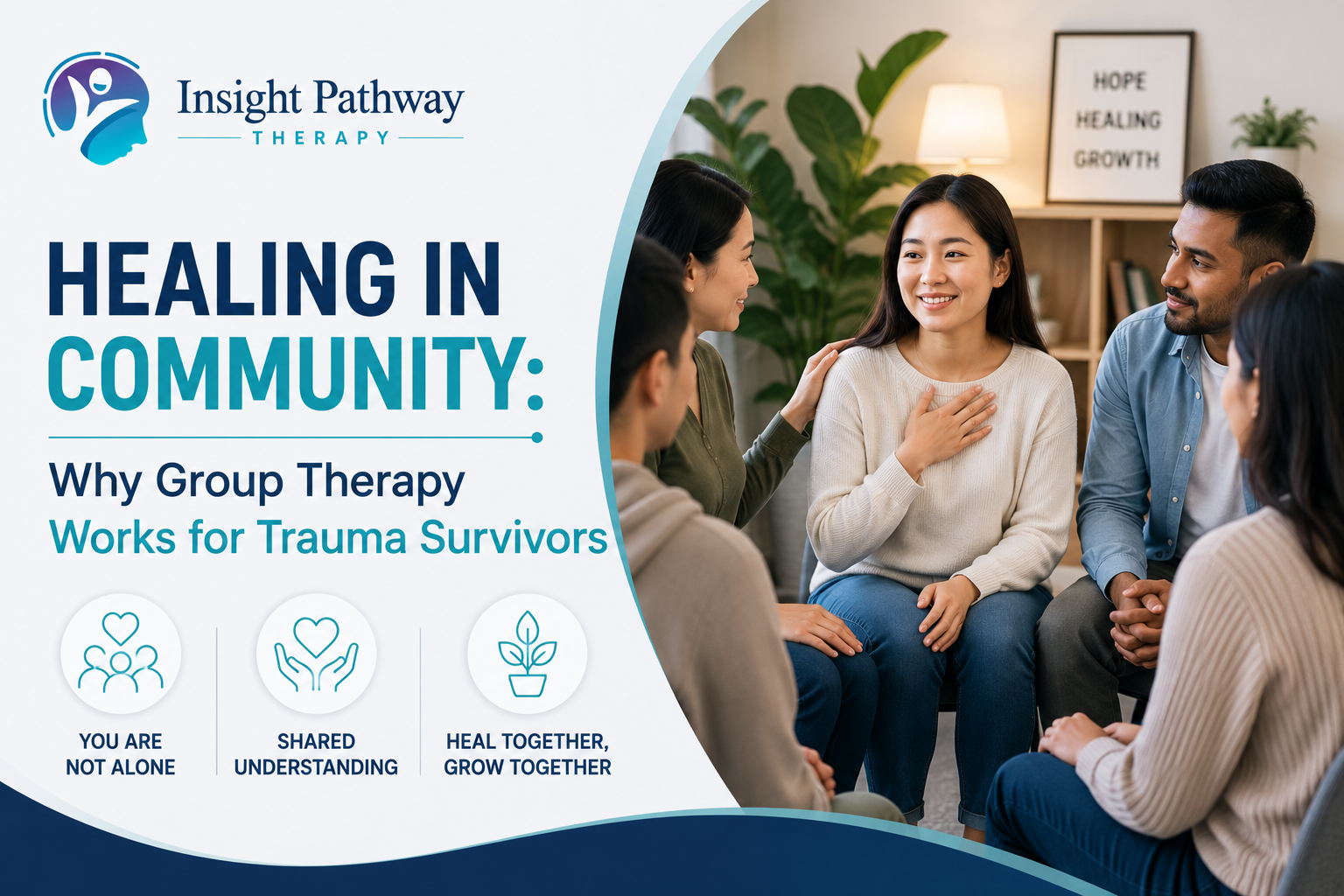
Group Therapy for Trauma Survivors: How Healing Together Can Help
Recovering from trauma can feel like a lonely and overwhelming journey. Many survivors struggle with isolation, shame, and the belief that no one else could possibly understand their pain.
For some people, group therapy for trauma survivors can offer an important alternative to isolation. Connecting with others who have experienced similar challenges may provide a sense of community, understanding, and support while individuals work toward recovery.
In this blog, we’ll explore how group therapy can support trauma recovery, the potential benefits of healing in a community, and how group therapy differs from one-on-one counselling.
1. What Makes Group Therapy Powerful for Trauma Recovery?
When people think of therapy, they often picture a private room and one-on-one conversations with a counsellor. While individual therapy can offer personalised support, group therapy for trauma survivors introduces another important element: connection with others.
In a well-facilitated group, participants may realise that they are not alone in their experiences. Hearing others describe emotions or challenges that feel familiar can reduce feelings of isolation and help participants feel understood.
For some survivors, this shared experience can become an important part of their trauma recovery journey.
2. How Does Community Healing Support Trauma Survivors?
Shared Stories That Break Isolation
One of the difficult experiences following trauma can be feeling disconnected from other people.
In an appropriately structured support group, participants can share experiences at a level they feel comfortable with. Hearing another person say “me too” can help reduce the sense that you are the only one struggling.
Collective Healing vs. Individual Counselling
Individual counselling provides privacy and allows therapy to be tailored to one person's needs.
Community-based therapy offers something different: the opportunity to connect with people who may understand aspects of your experience firsthand.
Participants may learn from one another, gain different perspectives, and practise communication and coping skills in a supportive environment.
The two approaches are not necessarily alternatives. Depending on the individual and the therapy programme, they may complement each other.
3. What Are the Benefits of Group Therapy for Trauma?
Many survivors wonder what group therapy can offer that individual counselling cannot.
Potential benefits include:
Emotional Validation
Hearing other people articulate feelings that you have experienced can help normalise difficult emotional responses and reduce feelings of isolation.
Reduced Loneliness
Being part of a supportive group can create opportunities for connection and belonging.
Practical Tools
Participants may learn coping strategies and perspectives from both the therapist and other group members.
Hope and Encouragement
Seeing other people work through challenges can provide encouragement and remind participants that change is possible.
The benefits of group therapy can vary depending on the group structure, therapist, participants, and individual needs.
4. What Does Research Say About Support Groups for Trauma Survivors?
Research has explored different forms of group-based interventions for trauma-related difficulties, including PTSD, anxiety, and depression.
Group interventions may provide opportunities for social connection, skills development, emotional support, and learning from others with similar experiences.
However, group therapy is not equally suitable for everyone, and the effectiveness of a particular approach depends on factors such as the type of intervention, the individual's circumstances, and the quality of professional facilitation.
Rather than assuming that group therapy will accelerate recovery for everyone, it is more helpful to consider whether the particular group is appropriate for your needs and treatment goals.
5. Who Can Benefit From Group Therapy?
Trauma Survivors Across Different Experiences
Group therapy may be considered by people who have experienced different forms of trauma or overwhelming life events, including:
- Abuse or domestic violence
- War or conflict
- Accidents
- Natural disasters
- Significant loss
- Other distressing or overwhelming experiences
The appropriate type of group will depend on the individual's needs and the focus of the programme.
People Experiencing Isolation
Group therapy may be particularly appealing to people who feel disconnected from friends, family, or their wider community.
A supportive environment can create opportunities to experience connection and practise healthier ways of relating to others.
6. Common Myths About Group Therapy
“I’ll Be Judged”
A professionally facilitated therapy group should have clear expectations around respect, privacy, and confidentiality.
However, confidentiality in a group setting works differently from individual therapy, so participants should understand the group's confidentiality guidelines before joining.
“I’ll Have to Share Everything”
You should not be expected to disclose more than you are comfortable sharing.
A therapist can help participants understand the group's expectations and determine an appropriate level of participation.
“Group Therapy Isn’t Effective”
Group therapy can be helpful for many people and concerns, but effectiveness varies according to the individual and the specific therapeutic approach.
It is not automatically better or worse than individual therapy.
7. Practical Tips for Getting Started With Group Therapy
If you are considering joining a trauma-focused support group, consider these steps:
Research Your Options
Look for groups facilitated by appropriately qualified mental health professionals and check whether the group is specifically designed for the type of support you need.
Ask Questions
Before joining, ask about:
- The therapist's qualifications and experience
- Group size
- Session structure
- Confidentiality expectations
- The type of concerns the group addresses
- What level of participation is expected
Set Realistic Expectations
Group therapy is not a quick fix. Give yourself time to become familiar with the group and decide whether the environment feels appropriate for you.
Start at Your Own Pace
You may not feel ready to speak openly during your first session. Listening and gradually becoming comfortable with the group can also be part of the process.
8. Healing Beyond the Group: Integrating Insights Into Daily Life
What happens outside therapy sessions can also matter.
You might:
- Journal after sessions to reflect on what you learned
- Practise coping skills between sessions
- Notice emotional patterns in everyday situations
- Apply communication skills to supportive relationships
- Discuss whether individual therapy could complement group support
For some people, combining group therapy with individual counselling may provide additional support. Whether this is appropriate depends on individual needs and treatment goals.
9. Is Group Therapy the Right Step for Your Healing Journey?
You may wonder, “Am I ready for group therapy?”
There is no universal answer.
Group therapy may be worth considering if you are looking for:
- Connection with others
- A sense of belonging
- Shared understanding
- Professional guidance
- Opportunities to learn from others
At the same time, group therapy may not be the right starting point for everyone. Some people may initially benefit more from individual support, particularly when they need greater privacy or have concerns that require more personalised attention.
A qualified therapist can help you consider which approach is most appropriate for your current circumstances.
10. The Power of Healing Together
Healing from trauma does not have to mean facing every experience alone.
While individual counselling offers privacy and personalised support, group therapy for trauma survivors can provide something different: connection with people who may understand aspects of the journey firsthand.
Sharing experiences, learning coping strategies, and receiving support within an appropriately facilitated group can help reduce isolation and create a sense of belonging.
If you are considering group therapy or other forms of trauma support, taking the time to understand your options can be an important first step.