
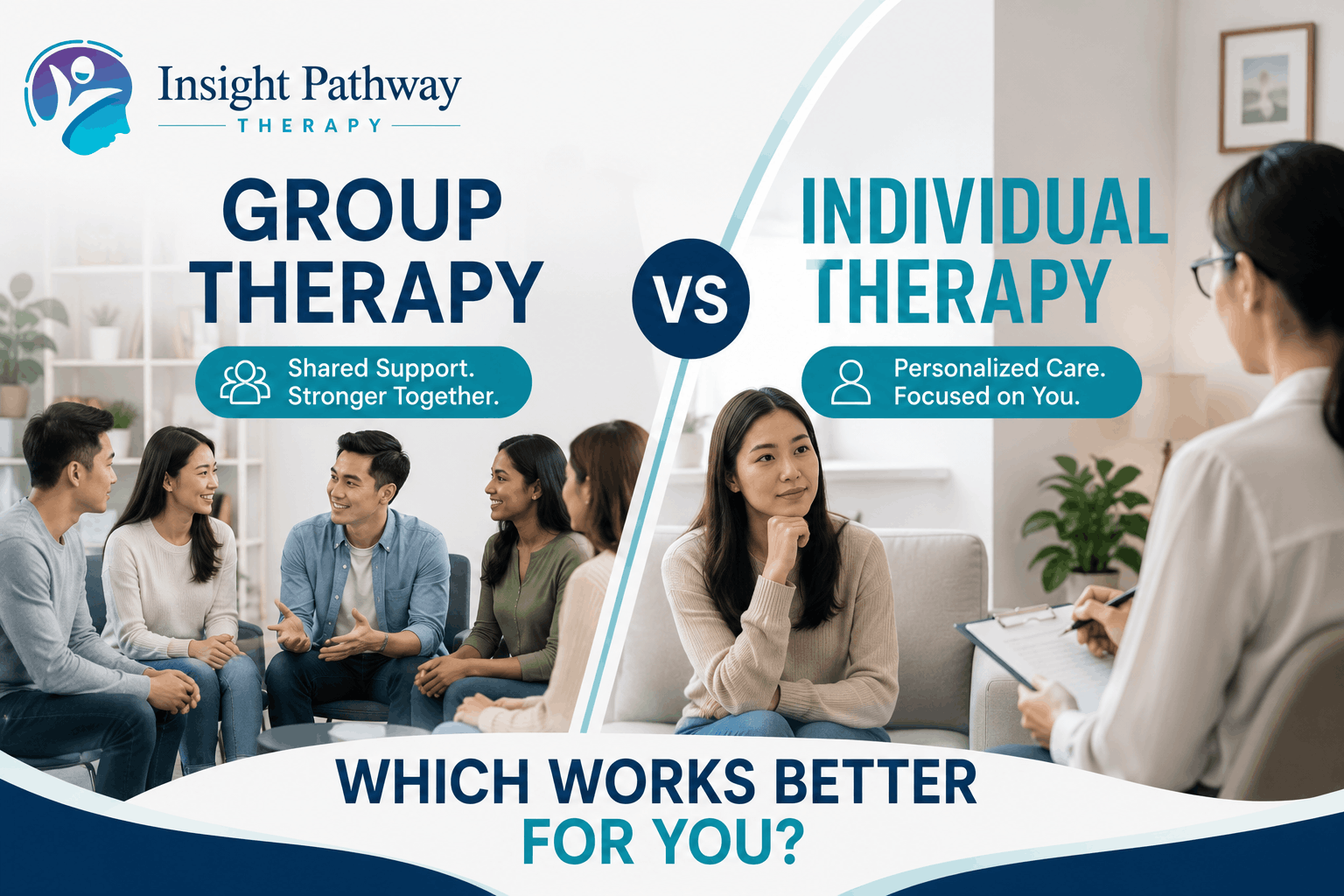
Group Therapy vs Individual Therapy: Which Is Right for You?
When seeking counselling, one of the first questions people face is: Should I choose group therapy or individual therapy?
Both approaches have unique strengths, and the right option often depends on your personal needs, goals, preferences, and comfort level.
Understanding the differences between group therapy and individual therapy can help you make a more informed decision about which type of support may suit you.
In this blog, we’ll explore the benefits of both approaches, their key differences, and factors to consider when choosing between them.
1. What Is the Difference Between Group Therapy and Individual Therapy?
Group therapy involves a small group of participants who meet with one or more therapists in a structured setting. Participants may share experiences, learn coping strategies, and receive support while developing a sense of connection with others.
Individual therapy, on the other hand, involves one-on-one sessions between a therapist and a client. The sessions can be tailored to the individual's concerns, circumstances, and therapy goals.
Both approaches can support mental health and emotional wellbeing, but the experience, level of privacy, and interpersonal dynamics can differ.
2. What Are the Benefits of Group Therapy?
Group therapy offers several benefits that may be particularly valuable for people who want connection and shared understanding.
Shared Experiences
Hearing from people who are experiencing similar challenges can reduce feelings of isolation and help participants feel understood.
Peer Learning
Group members may learn different coping strategies and perspectives from one another while receiving guidance from the therapist.
Community Support
A well-facilitated therapy group can provide a supportive environment where participants can practise communication, emotional expression, and interpersonal skills.
Potentially Lower Cost
Group therapy may be more affordable than individual counselling, although fees vary between therapists, clinics, and programmes.
For concerns such as anxiety, depression, grief, or certain trauma-related difficulties, group therapy may provide valuable peer connection alongside professional guidance. Suitability depends on the individual and the specific group.
3. What Are the Benefits of Individual Therapy?
For many people, the privacy and personalised attention of individual therapy are important.
Personalised Support
The therapist can tailor sessions around your individual concerns, history, circumstances, and goals.
Privacy
Individual sessions provide a private setting for discussing personal or sensitive experiences.
Deeper Individual Exploration
One-to-one therapy allows dedicated time to explore personal patterns, emotions, relationships, and other concerns in greater depth.
Flexibility
The focus of individual sessions can be adjusted as your needs and priorities change.
The benefits of individual therapy can make it a suitable option for people who prefer focused, one-to-one support.
4. Group Therapy vs Individual Therapy: Which Is Better for Trauma?
Both group and individual therapy can have a role in trauma recovery, but they offer different types of support.
Group Therapy
Group therapy can help people feel less isolated and provide opportunities to connect with others who have had similar experiences.
Individual Therapy
Individual therapy provides a more private environment where personal experiences can be explored at a pace appropriate for the individual.
There is no universal rule that one approach should always come before the other. The most appropriate format depends on the person's needs, level of stability, treatment goals, and the type of group available.
5. How Do You Know Which Therapy Is Right for You?
Your decision may depend on several factors.
Ask yourself:
- Do I feel comfortable sharing experiences with other people, or do I prefer privacy?
- Am I looking for connection and shared understanding, or more personalised attention?
- Would I feel supported by hearing other people's experiences?
- Do I have concerns that I would prefer to discuss privately?
- What are my current therapy goals?
- What type of setting feels emotionally safe for me?
Neither option is universally “better.”
The choice between group therapy and individual therapy should reflect what is appropriate for your current needs and circumstances.
6. Common Myths About Therapy Options
“Group Therapy Is Less Effective”
Group therapy is not simply a less effective version of individual therapy. Its value can come from both professional guidance and therapeutic factors such as shared experience, interpersonal learning, and connection.
“Individual Therapy Is Only for Severe Problems”
People seek individual therapy for many reasons, including stress, relationship difficulties, life transitions, emotional concerns, personal growth, and more complex mental health challenges.
“You Must Choose One or the Other”
Not necessarily. Some people may benefit from participating in both individual and group therapy when the combination is clinically appropriate and manageable for them.
7. Practical Tips for Choosing Between Group and Individual Therapy
If you are unsure which option to choose, consider these steps:
Consult a Professional
A therapist can discuss your concerns, goals, and preferences and help you consider which format may be appropriate.
Ask About the Structure
If you are considering group therapy, ask about the group size, focus, confidentiality expectations, session format, and whether the group is suitable for your concerns.
Consider Your Comfort Level
Think about where you are most likely to feel safe enough to participate honestly and consistently.
Stay Open to Change
Your therapy needs may change over time. Choosing one format now does not necessarily mean you have to use the same approach indefinitely.
8. Can You Combine Group and Individual Therapy?
In some situations, people may benefit from combining individual and group therapy.
For example, individual sessions may provide space for personal concerns, while group sessions can offer peer connection and opportunities to practise interpersonal skills.
However, combining both approaches is not automatically the best option for everyone. The decision should take into account your needs, treatment goals, time, emotional capacity, and the recommendations of your therapist.
9. Final Thoughts: Finding the Therapy That Fits You
Choosing between group therapy and individual therapy is a personal decision.
Group therapy can offer connection, shared experiences, and peer support, while individual therapy provides privacy and personalised attention.
There is no single “right” choice for everyone.
The most useful approach is one that feels appropriate for your needs, supports your therapy goals, and gives you a setting where you can engage honestly and consistently.
If you are unsure where to begin, speaking with a qualified therapist can help you understand your options and choose a suitable starting point.