
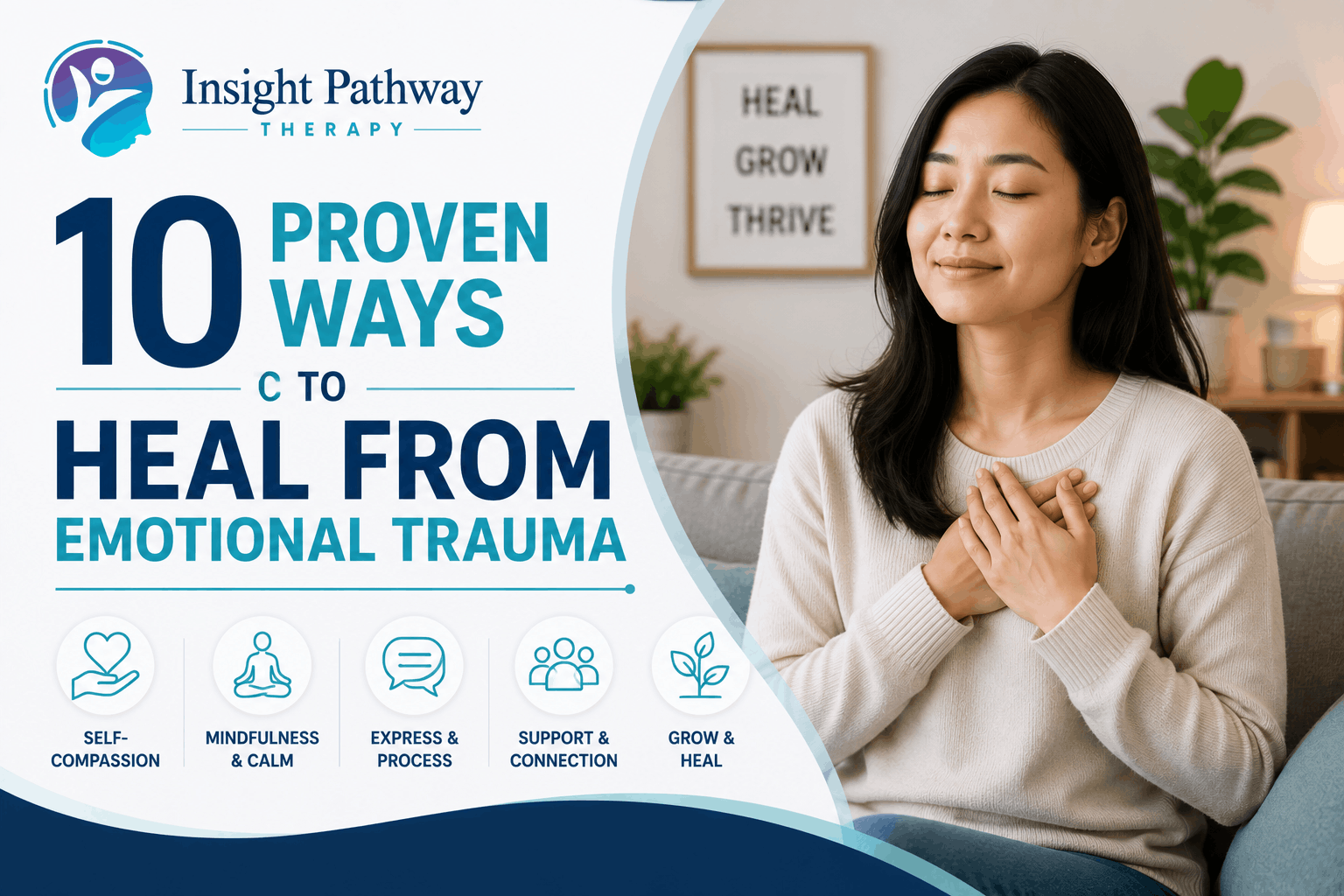
Healing Trauma: 10 Ways to Support Your Emotional Healing and Recovery
Emotional trauma can feel like an invisible wound that affects your mind, body, and relationships. Whether it follows loss, abuse, or a major life change, healing trauma is a deeply personal journey that takes time, patience, and compassion.
Recovery is possible, and support can make the process easier to navigate. With appropriate tools, professional guidance, and self-compassion, you can begin moving beyond the impact of painful experiences and reconnect with a greater sense of safety and wellbeing.
Here are 10 ways to begin your trauma recovery journey and support emotional healing.
1. Acknowledge Your Trauma
The first step in healing trauma can be recognising that what happened affected you. Denial or avoidance may make it difficult to understand what you are experiencing, while acknowledging your experience can create space for healing.
This does not mean blaming yourself or forcing yourself to relive painful memories. It means recognising your experience and allowing yourself to say, “Yes, this hurt me.”
Acknowledging what happened can be an important part of beginning your trauma healing process.
2. Seek Professional Help
Trauma can be complex, and professional support can provide a safe and structured space to work through difficult experiences.
Trauma-informed approaches may include therapies such as EMDR (Eye Movement Desensitization and Reprocessing), Cognitive Behavioral Therapy (CBT), and somatic or body-based approaches, depending on the individual and their needs.
Working with a trauma-informed therapist can provide guidance and support throughout your trauma recovery journey. Healing does not have to mean doing everything alone.
3. Practice Mindfulness and Grounding
Mindfulness can help you bring your attention back to the present moment when your thoughts become focused on the past.
Grounding techniques may include:
- Taking slow, deep breaths
- Feeling your feet against the floor
- Noticing objects and sounds around you
- Paying attention to physical sensations in the present moment
These practices can help you reconnect with the present and manage feelings of anxiety or overwhelm.
4. Reconnect With Your Body
After a traumatic experience, some people may feel disconnected from their bodies or uncomfortable with physical sensations.
Gentle movement such as walking, stretching, yoga, or other activities that feel safe can help you reconnect with your body.
Body-based approaches may also be explored with a qualified professional as part of trauma-focused support.
The goal is not to force yourself through uncomfortable sensations, but to gradually develop a greater sense of awareness and safety in your body.
5. Establish Safe and Supportive Relationships
Supportive relationships can play an important role in trauma recovery.
Surround yourself with people who make you feel respected, heard, and emotionally safe. This might include trusted friends, family members, support groups, or other appropriate sources of support.
Healthy relationships can provide connection and reassurance while you learn to recognise that not every relationship will repeat the experiences that caused you harm.
6. Develop a Self-Care Routine
Self-care after trauma is not about avoiding difficult emotions or pretending everything is fine. It is about creating stability and giving your mind and body consistent opportunities for rest and care.
You might include:
- Journaling
- Reading
- Spending time outdoors
- Taking a warm bath
- Getting adequate rest
- Making time for activities that feel calming or meaningful
Small, consistent acts of care can help create a greater sense of routine and stability during recovery.
7. Express Your Emotions Creatively
Art, music, movement, and writing can provide alternative ways to express emotions that may be difficult to put into words.
You might try:
- Painting or drawing
- Writing
- Dancing or gentle movement
- Playing or listening to music
- Keeping a journal
Creative expression does not replace professional trauma treatment, but it can be a meaningful way to explore and communicate your emotional experience.
8. Set Healthy Boundaries
Trauma can affect how comfortable you feel saying “no,” expressing your needs, or protecting your emotional space.
Healthy boundaries can help you recognise what feels safe and what does not.
Start with small steps. You might limit contact with situations or people that consistently cause distress, communicate your needs more clearly, or give yourself permission to step away when something feels overwhelming.
Over time, practising boundaries can strengthen your confidence in respecting your own needs.
9. Practice Self-Compassion
Healing is not always linear. There may be days when you feel stronger and days when difficult emotions return.
Try to respond to yourself with compassion rather than criticism.
Instead of thinking:
“I should be over this by now.”
Try:
“I’m doing the best I can with what I’ve experienced.”
Self-compassion can help reduce shame and encourage a more supportive relationship with yourself as you move through recovery.
10. Find Meaning and Growth Beyond the Pain
Some people experience what is described as post-traumatic growth—the possibility of developing new perspectives, priorities, or sources of meaning following difficult experiences.
This might involve discovering a new passion, strengthening meaningful relationships, helping others, or choosing to live in ways that feel more authentic.
Growth does not mean that the trauma was positive or necessary. It means that, over time, some people are able to develop new meaning alongside their experiences.
Your trauma does not have to define your entire identity or future.
11. Understanding the Trauma Healing Process
The trauma healing process is not a one-size-fits-all journey.
Progress may look different from person to person, and difficult days do not necessarily mean that you are moving backwards.
Therapy, grounding, supportive relationships, self-care, boundaries, and self-compassion can all become part of a broader recovery process.
What matters is finding approaches that feel appropriate and safe for your individual circumstances.
12. Final Thoughts: Healing Trauma Takes Time
Healing trauma takes courage, patience, and support. You do not have to rush the process or expect yourself to feel better overnight.
Start with small steps that help you feel safer, more supported, and more connected to yourself.
Professional support can be especially valuable when trauma symptoms are significantly affecting your relationships, daily functioning, or emotional wellbeing.
Progress does not require perfection. Recovery can be a gradual process of understanding what happened, caring for yourself in the present, and building a life that is not defined solely by your past experiences.