
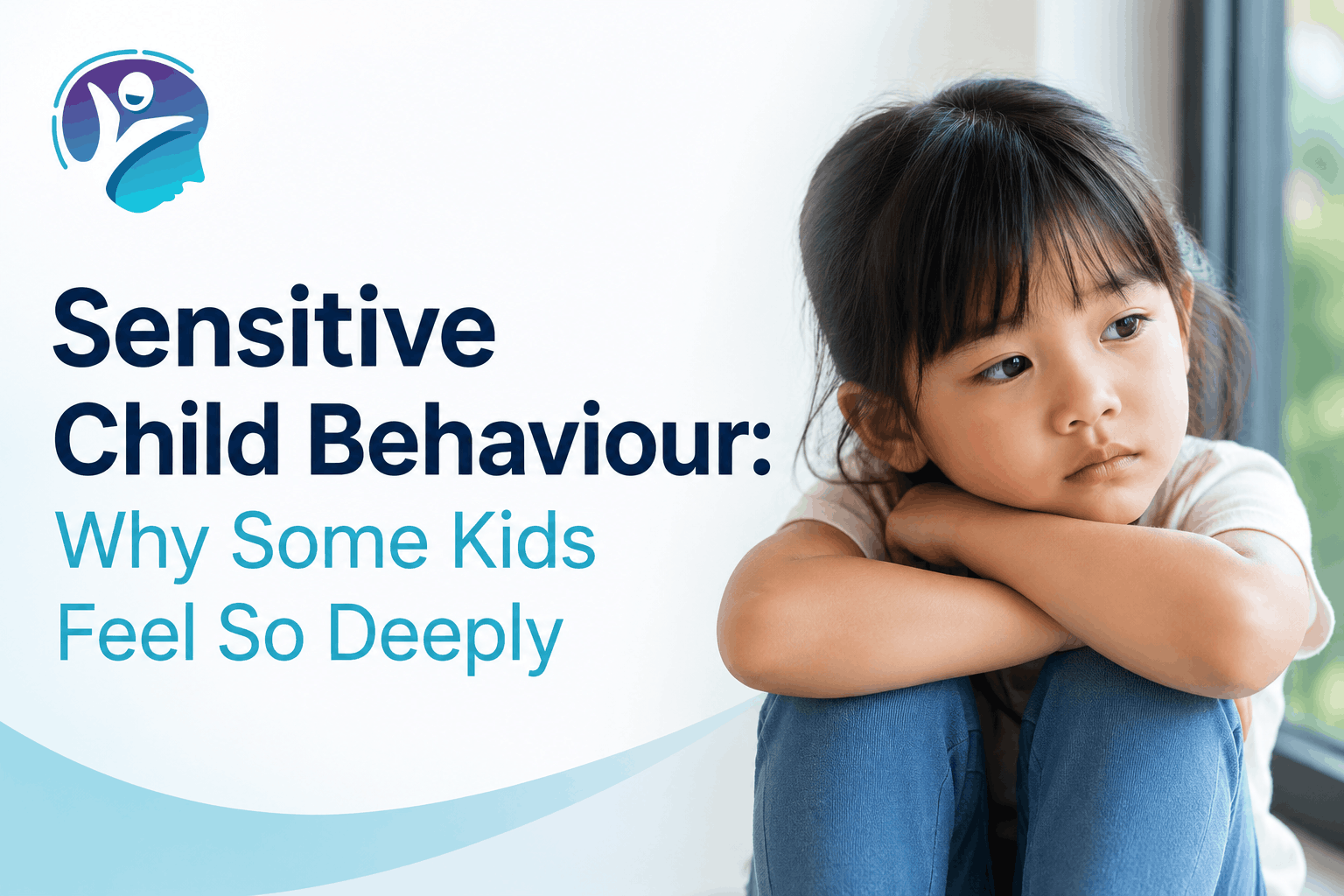
Sensitive Child Behaviour: Understanding and Supporting a Highly Sensitive Child
If you’re parenting a child who feels things intensely, cries easily, gets overwhelmed quickly, or notices every little detail, you may be navigating sensitive child behaviour every day.
These children aren’t “too much,” “dramatic,” or “overreacting.” They may simply be wired to experience emotions and sensory input more deeply than others.
Understanding why this happens can change how you support them. Many parents only see the outbursts, tears, or strong reactions, but underneath may be a child with a sensitive nervous system and a deep need for emotional safety.
Let’s explore why sensitivity can show up the way it does, how to recognise the signs, and what you can do to help your child thrive.
1. Why Sensitive Child Behaviour Happens in the First Place
Every child has their own temperament, but sensitive child behaviour can be influenced by how a child’s nervous system responds to the world.
Some children notice more, feel more, and absorb more from their environment.
A Highly Sensitive Nervous System
Some children naturally have a nervous system that is more alert and responsive. This may contribute to
- Stronger emotional reactions
- Deeper empathy
- Quick overstimulation
- Heightened awareness
- Intense responses to change
This is why a highly sensitive child may go from calm to overwhelmed quickly. They may be processing more sensory and emotional information than the people around them realise.
2. Understanding the Traits of a Highly Sensitive Child
Emotional Sensitivity in Children Is Real and Valid
Emotional sensitivity in children isn’t a weakness. It can be part of their temperament.
Sensitive children may feel emotions deeply and react strongly to frustration, disappointment, or unexpected changes.
What looks like “overreacting” may actually be a child whose emotional system becomes overwhelmed quickly.
Sensory Sensitivity in Kids Is Common
Some children experience sensory sensitivity, meaning everyday stimuli can feel particularly intense.
For example:
- Loud noises may feel overwhelming
- Clothing tags may feel uncomfortable
- Bright lights or crowds may feel intense
- Certain food textures may feel unpleasant
This heightened sensory input can contribute to sensitive child behaviour, particularly in busy or unpredictable environments.
Children With Deep Empathy Often Feel More
Sensitive children may be deeply empathetic. They can notice and respond strongly to the emotions of people around them.
This can support compassion and awareness, but it can also contribute to emotional exhaustion when they absorb more than they know how to manage.
3. Signs Your Child May Be Highly Sensitive
Not all sensitivity looks dramatic. Some signs may be subtle and internal.
Here are some common indicators of sensitive child behaviour:
Big Feelings Over Small Things
A small disappointment can lead to tears or frustration.
This doesn’t necessarily mean a child is spoiled. It may mean that child emotional overwhelm happens quickly for them.
Strong Reactions to Changes in Routine
Sensitive children may feel more comfortable with predictability.
Sudden changes in plans or routines can trigger stress, resistance, or emotional shutdown.
Easily Overstimulated by Busy Environments
Crowd places, loud sounds, bright environments, or too much activity can lead to overstimulation.
Deep Thoughtfulness and Awareness
A highly sensitive child may notice patterns, moods, sounds, and details that others overlook.
Needs Time to Warm Up
New people, unfamiliar environments, or new experiences may feel intimidating. Some children prefer to observe before participating.
Difficulty With Transitions
Moving from one activity to another can trigger stress or resistance, particularly when a child needs more time to adjust.
If these signs feel familiar, you may be seeing sensitive child behaviour rather than simply disobedience.
4. Why Sensitive Child Behaviour Feels So Big
Their Nervous System Absorbs More Input
A sensitive child may take in a large amount of sensory and emotional information.
This can contribute to child emotional overwhelm, sometimes at moments that seem unexpected to adults.
Their Emotional Cup Fills Faster
When emotions feel intense and arrive quickly, a child may reach their limit sooner.
What appears to be a sudden meltdown may actually be the result of feelings and stimulation building over time.
They Feel Safe Enough at Home to Release Feelings
Some sensitive children may appear calm in public but become emotional once they are home.
This can sometimes happen because home feels like a safer environment where they can release emotions they were holding in.
They Struggle to Self-Regulate Alone
Big emotions can overwhelm a child’s ability to settle themselves.
They may need an adult’s support and guidance to regulate and return to a calmer state.
5. How to Support Sensitive Child Behaviour Without Overwhelm
Supporting a sensitive child isn’t about “fixing” them. It’s about giving them appropriate tools, structure, and emotional reassurance.
Stay Calm During Big Emotions
Your calm presence can provide an anchor when your child’s emotions feel overwhelming.
Slow your voice, soften your body language, and stay present.
Prepare Them for Transitions
Use gentle warnings such as:
“Five more minutes, then we clean up.”
Predictability can reduce child emotional overwhelm and give your child time to prepare for a change.
Create a Calm Environment at Home
Soft lighting, reduced noise, and quiet spaces can help a highly sensitive child manage sensory stimulation.
Validate Their Feelings
Try saying:
“I can see that was really hard for you.”
Validation helps a child feel understood rather than judged for experiencing strong emotions.
Teach Emotional Regulation Skills
Sensitive children may benefit from learning skills such as:
- Deep breathing
- Grounding techniques
- Sensory tools
- Naming emotions
- Taking breaks from noise and stimulation
Set Boundaries With Warmth
Sensitivity doesn’t mean a child should have no limits.
Children still need boundaries. The difference is in how those boundaries are communicated.
Use a calm, clear, and supportive approach rather than relying on harshness or shame.
6. What Sensitive Children Need Most
Connection Before Correction
When a child is overwhelmed, correcting behaviour before creating emotional connection may make the situation more difficult.
Start by helping the child feel safe and understood.
Predictability and Routine
A structured routine can help reduce uncertainty and support emotional regulation.
Predictability can be especially helpful for children who become overwhelmed by unexpected changes.
Patience and Understanding
Remember that their reactions can feel big because their emotional experiences may feel big to them.
Patience helps create the emotional safety they need to learn regulation skills.
Sensory Breaks Throughout the Day
Short breaks can help prevent a build-up of stimulation.
A quiet space, movement break, reduced noise, or a few moments of calm can help a child reset when they are becoming overwhelmed.
7. When to Seek Additional Support
You may consider seeking professional support if:
- Emotional reactions regularly interfere with daily life
- Sensory challenges are significantly affecting your child
- Your child struggles socially
- Meltdowns are very frequent or difficult to manage
- Sensitivity affects school or home functioning
A child therapist or other qualified professional can help families understand emotional and sensory regulation needs and develop supportive strategies.
8. Final Thoughts: Helping Your Sensitive Child Thrive
Sensitive child behaviour is not a flaw.
A child who feels deeply may also grow into someone who is compassionate, thoughtful, creative, and highly aware of the world around them.
What they need is not to be made less sensitive. They need support, understanding, appropriate boundaries, and space to develop the skills to manage strong emotions and sensory experiences.
Your child is not “too much.”
Your child is not simply being dramatic.
They may simply experience the world with greater intensity.
With patient guidance and emotional support, that sensitivity can become an important part of who they are.