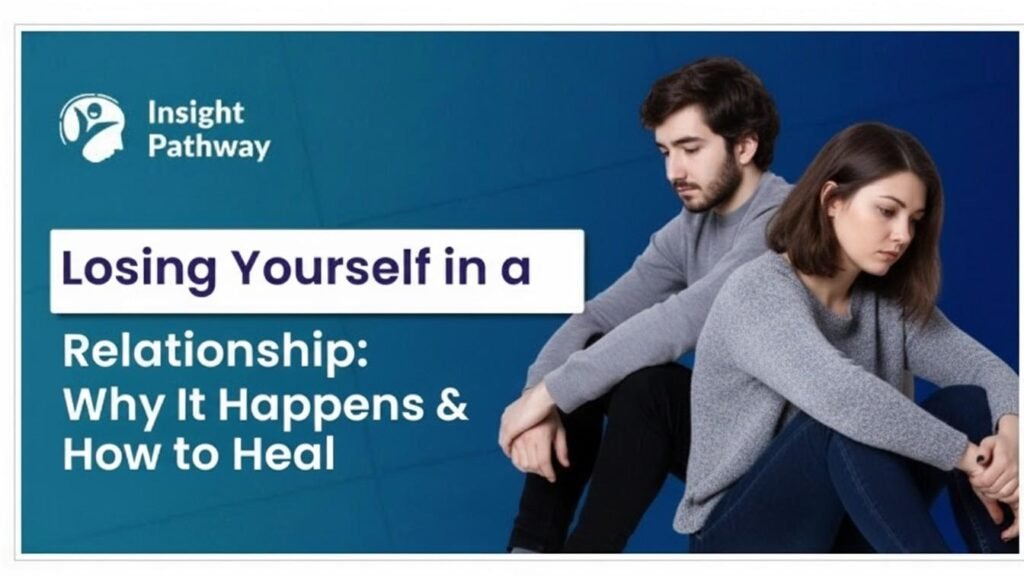
Many people enter relationships with the best intentions, wanting love, connection, and closeness. But somewhere along the way, you may notice you’re not acting like yourself anymore. Maybe you accommodate too much, silence your opinions, or prioritise your partner’s needs until yours slowly disappear. This experience of losing yourself in a relationship is more common than you think, and it doesn’t happen all at once. It happens quietly, gradually, in tiny compromises that begin to reshape your identity.
If you’ve ever looked in the mirror and thought, “I don’t even know who I am in this relationship,” you’re not alone. Let’s explore why this happens, how to recognise the signs, and how to reclaim your voice and identity without losing love.
Why Losing Yourself in a Relationship Happens
Many people believe identity loss happens only in unhealthy relationships, but that’s not true. Even loving, well-intentioned partnerships can unintentionally create relationship identity loss when boundaries blur, emotional needs collide, or self-worth feels fragile.
You Learned to Make Others Comfortable First
If you grew up in a home where you had to keep the peace, anticipate emotions, or avoid conflict, you may automatically prioritise others. That early pattern can lead to relationship boundary issues later in life. Over-accommodating becomes your default, and self-sacrifice feels normal, even when it’s hurting you.
You Connect Love With Self-Abandonment
Many people confuse love with losing themselves. If you were taught to be “easy,” agreeable, or not to upset others, reshaping your identity for a partner may feel natural. But over time, this creates a deep fear of losing identity, especially if your sense of self feels fragile.
You’re Seeking Safety Through Acceptance
Wanting to be loved isn’t wrong; it’s human. But when love becomes tied to approval, you may shift your personality to fit the relationship. This often stems from insecure attachment, childhood wounds, or chronic people-pleasing.
Your Boundaries Slowly Disappear Without Noticing
Boundaries don’t usually disappear loudly; they fade quietly. One compromise becomes another. One “it’s fine” becomes routine. Before you know it, your sense of identity feels diluted because the relationship takes up all the emotional space.

Signs You’re Losing Yourself in a Relationship
It can be hard to see when you’re in the middle of it, but here are subtle and powerful signs of relationship identity loss:
1. You Silence Your Needs to Keep the Peace
You avoid sharing your preferences, emotions, or concerns because you don’t want to create tension or conflict.
2. Your Partner’s Needs Always Come First
You automatically shift your plans, schedule, or priorities to accommodate them, even when it leaves you drained.
3. You Feel Disconnected From Your Own Interests
Activities you once loved fade away because they don’t align with your partner’s interests or routines.
4. You’re Afraid of Disagreement
Healthy relationships allow differences. But if disagreement feels dangerous or threatening, you may already be losing pieces of yourself.
5. You Rely on the Relationship for Self-Worth
When self-value depends on how your partner sees you, self-worth in relationships becomes fragile and conditional.
6. You Say “We” More Than “I”
A healthy connection includes individuality. When your identity merges into the relationship entirely, that’s a key sign of self-loss.
Why Losing Yourself Feels So Emotionally Heavy
When you experience relationship identity loss, it’s not just a mental shift; it’s emotional and physiological. Your nervous system becomes trained to prioritise harmony over authenticity.
Fear of Rejection or Abandonment
If your inner child learned that love is conditional, you may instinctively minimise yourself to avoid conflict.
Fear of Being “Too Much”
Many adults shrink themselves because they fear being a burden, demanding, or “difficult.”
Fear of Losing Love
Your desire to be loved becomes so strong that losing the connection feels scarier than losing yourself.
Safety Feels Tied to Approval
When your emotional safety depends on how your partner responds, authenticity feels risky.
These fears contribute to relationship boundary issues and make it harder to express your true self.
How to Stop Losing Yourself in a Relationship
Healing doesn’t mean becoming distant or detached. It means learning how to hold onto your identity while staying connected. Here are supportive steps that help rebuild emotional balance.

1. Reconnect With Your Inner Preferences
Start asking yourself simple questions:
- What do I actually enjoy?
- What do I want today?
- What feels good for me?
This reconnects you with your own emotional voice.
2. Re-Establish Emotional Boundaries
Healthy relationships require emotional clarity. You can begin by setting small boundaries like:
- “I need time to think before answering.”
- “I don’t have the capacity to do that today.”
- “This feels uncomfortable for me.”
These strengthen your identity without creating distance.
3. Practise Gentle Honesty
Being truthful doesn’t have to be harsh. Honest expression is one of the strongest antidotes to losing yourself in a relationship.
Try:
“I care about us, and I also want to stay connected to myself.”
4. Cultivate Your Own Life Outside the Relationship
Revisit hobbies, friendships, goals, and routines that belong to you, not the relationship. Independence supports emotional stability.
5. Strengthen Your Self-Worth
When self-worth is stable, losing identity becomes less likely. You stop over-giving, over-accommodating, and bending yourself to fit someone else’s needs.
Try journaling, affirmations, therapy, or practices that reinforce:
“I am enough without changing myself to be loved.”
6. Notice When You’re Shrinking Yourself
Pay attention to when you minimise your feelings, opinions, or desires. Shrinking is a survival response, not a sign you lack strength. Awareness brings change.
When Relationship Boundary Issues Need Extra Support
If identity loss feels deep, if your boundaries feel impossible to set, or if you feel emotionally enmeshed or dependent, support can help you rebuild your sense of self.
A therapist can help you:
- understand your attachment style
- identify emotional patterns
- strengthen boundaries
- rebuild self-worth
- create healthier relational habits
You don’t have to navigate relationship identity loss alone.

Final Thoughts
Losing yourself in a relationship doesn’t mean you’re weak; it means you’ve learned to love by blending, accommodating, or prioritising connection over self. But healthy love doesn’t require self-erasure. It requires balance, communication, and two whole people choosing one another.
You deserve a relationship where your identity feels valued, your boundaries feel respected, and your self-worth feels rooted in who you are, not how well you perform or please.
Reclaiming yourself is not the end of love; it’s the beginning of healthier love.