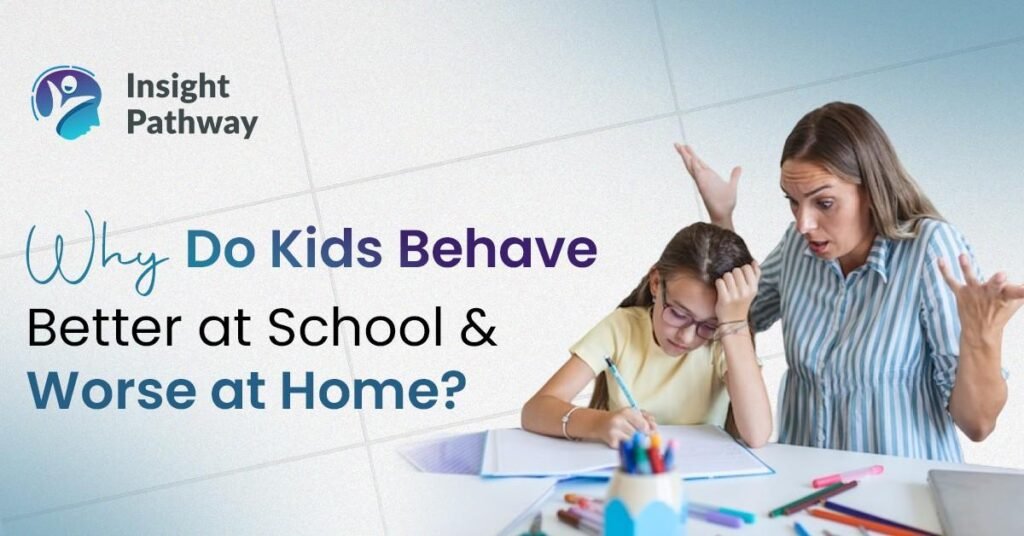
If your child seems calm and cooperative at school but unravels the moment they walk through the front door, you’re not alone. Parents often feel confused or frustrated when child behaviour at home looks completely different, and sometimes more challenging, than at school.
You might wonder:
“Why do they listen to everyone except me?”
“Why do they save their meltdowns just for home?”
“Does this mean I’m doing something wrong?”
The good news? No.
There are very normal reasons kids behave differently at home, and understanding these reasons can transform the way you respond.
Let’s explore what’s really going on beneath the surface.
Why Child Behaviour at Home Looks So Different
Home Is Where Emotional Safety Lives
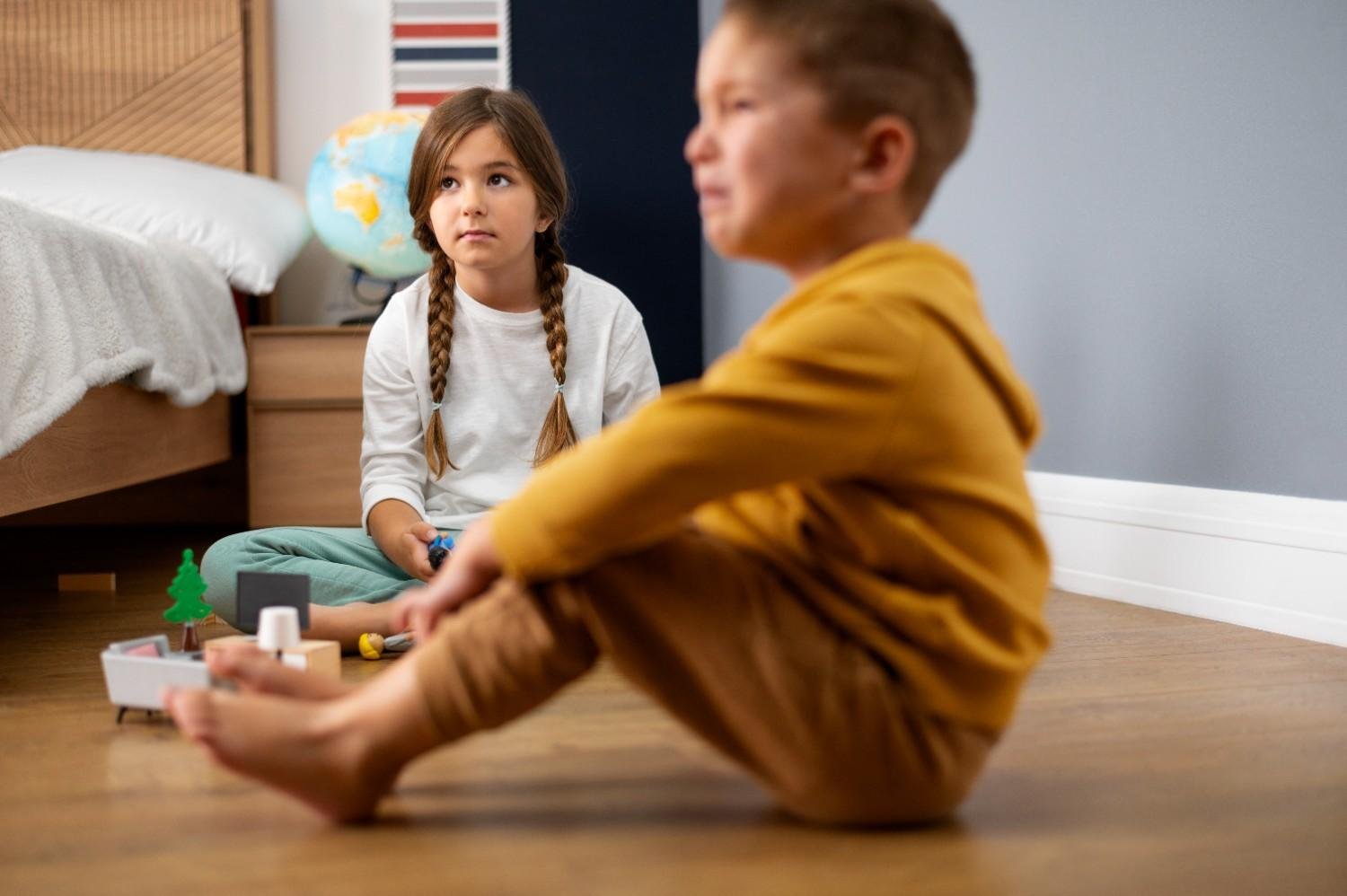
Children can only hold in their emotions for so long. At school, they follow rules, stay quiet, share, wait their turn, and manage social situations. That’s a lot of emotional labour for a developing brain.
When they come home, their guard drops.
This is why child behaviour at home often includes:
- bigger emotions
- crying “for no reason”
- irritability
- refusal to cooperate
- “attitude,” whining, or defiance
It isn’t defiance. It’s release. Home is where children feel safest to let go.
Reasons Kids Behave Better at School
1. School Has Strong Structure and Predictability
Classrooms run on routines: morning work, circle time, snack, recess, transitions, cleanup.
Children thrive under structured environments because expectations are crystal clear.
At home, the flexibility, while healthy, can feel overwhelming. When routines aren’t predictable, behaviour problems at home naturally increase.
2. Kids Use Up Their Emotional Energy at School
Children spend hours managing:
- social interactions
- sensory overload
- academic tasks
- rules and expectations
- transitions they may not like
By the time they’re home, they have very little emotional energy left. This is why kids acting out at home is not a sign of disrespect, it’s exhaustion.
3. Teachers Use Professional Behaviour Strategies
Teachers are trained in classroom management, emotional regulation strategies, and behaviour cues.
Parents aren’t meant to run their homes like schools, and that’s okay. Home is more relational, emotional, and intimate.
The Science Behind “After-School Restraint Collapse”
This term describes what happens when children keep themselves together at school, only to fall apart as soon as they see their parent or caregiver.
Why does it happen?
Because your presence signals safety.
Your child knows you won’t reject them, so their emotions spill out.
This is actually a sign of a secure connection.
What Behaviour Problems at Home Are Really Communicating
When school behaviour is excellent but home behaviour is intense, your child is saying:
- “I’m tired.”
- “I held everything in all day.”
- “I’m overwhelmed.”
- “I feel safe with you.”
- “I need help regulating my emotions.”
This reframes child behaviour at home from “problem” to “communication.”
How to Improve Child Behaviour at Home
1. Create a Gentle After-School Transition
Instead of immediately asking about their day or instructing them to do homework, give a decompression window.
Try:
- quiet play
- a healthy snack
- reduced noise
- soft lighting
- 10–15 minutes of free time
This simple shift can greatly reduce child behaviour issues.
2. Build Predictable Home Routines
Structure helps children feel safe and calm.
Examples:
- after-school routine
- homework routine
- bedtime routine
- screen-time rules
- morning flow
Predictability reduces kids acting out at home because they know what’s coming next.
3. Support Emotional Regulation
Children often don’t know how to calm down. They learn emotional regulation from co-regulation, meaning your calm becomes their calm.
Try:
- naming emotions (“It looks like your body is tired and overwhelmed.”)
- slow, deep breathing together
- grounding exercises
- hugs and physical closeness
4. Reduce Sensory Overload in the Evenings
Many meltdowns come from overstimulation.
Try:
- quiet activities
- dimmer lights
- limiting screens
- soft music
- calm play
A regulated nervous system creates more regulated behaviour.
5. Teach Expression Instead of Suppression
Encourage your child to share how the day felt. Not just what they did.
Try:
- “What was tricky today?”
- “What made your body feel tired?”
- “Was anything surprising or frustrating?”
When children feel heard, child behaviour at home naturally improves.
When Should Parents Seek Extra Support?
It may be helpful to talk to a child therapist if:
- aggression is happening daily
- meltdowns last longer than an hour
- school behaviour also starts declining
- your child seems overly anxious, fearful, or shut down
- you feel overwhelmed or unsure how to help
Most of the time, though, the school-home behaviour gap is completely normal and not a sign of deeper issues.
Final Thoughts: Your Child Isn’t Misbehaving, They’re Trusting You
When your child falls apart at home, they’re not trying to “test” you. They’re showing you:
“You are my safe place.”
They behave well at school because they must.
They behave differently at home because they can.
Once you understand what child behaviour at home really represents, safety, emotional release, and connection, you can support your child through calmer routines and more regulated evenings.
You’re not failing. Your child isn’t difficult.
You’re simply seeing the real, unfiltered version of the child who trusts you the most.